Direct Answer:
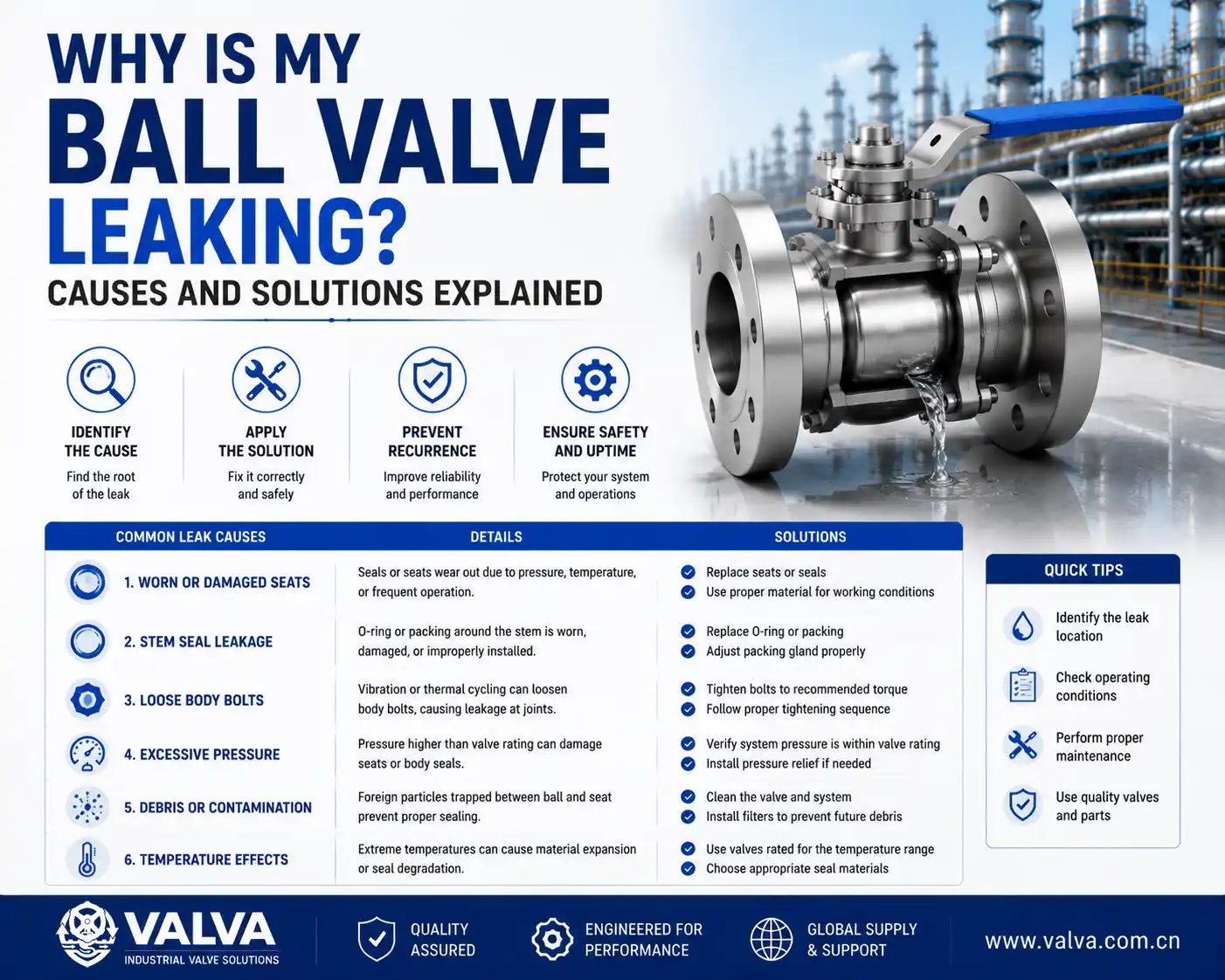
Why is my ball valve leaking? A ball valve usually leaks because of worn seats, damaged seals, debris inside the valve, corrosion, improper installation, or excessive wear after long-term use. Identifying whether the leak is internal or external is the first step toward selecting the correct repair method.
This guide explains the most common causes of ball valve leakage, how to diagnose each problem, and the best solutions to restore reliable sealing.
Why Do Ball Valves Leak?
Ball valves provide excellent shut-off performance, but several factors can reduce their sealing ability over time.
The most common causes include:
- Worn valve seats
- Damaged stem seals
- Debris between the ball and seat
- Corrosion
- High operating temperature
- Excessive pressure
- Improper installation
- Normal wear after repeated operation
Regular inspection helps identify these issues before they become serious.
1. Worn Valve Seats
Valve seats create the seal between the ball and the valve body. After thousands of operating cycles, the seat material gradually wears.
Symptoms
- Valve leaks when fully closed
- Reduced shut-off performance
- Increasing operating torque
Solution
- Replace worn seats.
- Select seat materials suitable for the operating temperature and media.
- Follow the manufacturer’s pressure limits.
2. Damaged Stem Seals
If fluid leaks around the valve stem, the sealing components may have failed.
Common Causes
- Worn packing
- Damaged O-rings
- Loose gland nut
- Aging rubber seals
Solution
- Tighten the gland nut if appropriate.
- Replace damaged packing or O-rings.
- Inspect the stem for wear before reassembly.
3. Debris Inside the Valve
Solid particles often become trapped between the ball and the seat, preventing complete sealing.
Common Sources
- Welding slag
- Rust particles
- Sand
- Scale buildup
Solution
- Flush the pipeline.
- Clean the valve interior.
- Install upstream strainers to reduce contamination.
4. Corrosion Damage
Corrosion attacks sealing surfaces and weakens valve components.
Common Causes
- Aggressive chemicals
- Saltwater exposure
- Incorrect material selection
Solution
- Upgrade to stainless steel or duplex stainless steel.
- Select materials compatible with the process media.
- Perform regular corrosion inspections.
5. Improper Installation
Installation mistakes often lead to early leakage.
Common Problems
- Misaligned flanges
- Uneven bolt tightening
- Excessive pipe stress
- Damaged flange gaskets
Solution
- Realign the pipeline.
- Tighten flange bolts evenly.
- Replace damaged gaskets.
- Follow the manufacturer’s installation guidelines.
6. Excessive Pressure or Temperature
Operating beyond the valve’s design limits accelerates seal failure.
Signs
- Seat deformation
- Seal hardening
- Internal leakage
Solution
- Verify the valve pressure class.
- Check the operating temperature.
- Select a valve designed for the application.
7. Aging and Normal Wear
Even properly maintained ball valves eventually wear out.
Typical Signs
- Frequent leakage
- Difficult operation
- Worn sealing surfaces
- Reduced shut-off performance
Solution
- Replace worn internal components.
- Replace the entire valve if major parts are damaged.
How to Prevent Ball Valve Leakage
Preventive maintenance greatly reduces leakage problems.
Best practices include:
- Inspect valves regularly.
- Keep pipelines clean.
- Exercise valves periodically.
- Replace seals before failure.
- Select proper materials for the process media.
- Operate the valve within its pressure and temperature ratings.
Preventive maintenance extends service life and reduces downtime.
When Should You Replace a Leaking Ball Valve?
Replacement is usually recommended when:
- The valve body is cracked.
- The ball surface is heavily damaged.
- Corrosion has weakened the valve.
- Repairs no longer restore reliable sealing.
- Replacement costs less than repeated maintenance.
For critical industrial systems, replacing a severely damaged valve is often the safest option.
Conclusion
If you’re asking “Why is my ball valve leaking?”, the answer is usually worn seats, damaged seals, debris, corrosion, or incorrect installation. Identifying the root cause allows you to choose the correct repair or replacement solution. Regular maintenance, proper material selection, and correct installation remain the best ways to prevent future leakage.
Frequently Asked Questions
Why does my ball valve leak when it is closed?
Worn seats, debris trapped inside the valve, or a damaged ball surface usually prevent complete sealing.
Can a leaking ball valve be repaired?
Yes. Many leaks can be repaired by replacing seats, seals, O-rings, or stem packing. However, valves with severe body or ball damage should be replaced.
How can I stop my ball valve from leaking?
Clean the valve, replace worn sealing components, verify proper installation, and ensure the valve operates within its rated pressure and temperature limits.
Related Articles
Technical & Design Insights
- What Is a Ball Valve
- How Does a Ball Valve Work
- Different Types of Ball Valves
- Floating vs Trunnion Ball Valve
- Full Port vs Reduced Port Ball Valve
- Top Entry vs Side Entry Ball Valve
- V Port vs Standard Ball Valve
- What Are Ball Valves Used For
- One Piece vs Two Piece Ball Valve
- Two Piece vs Three Piece Ball Valve
- What Are the Different Types of Ball Valves