Direct Answer:
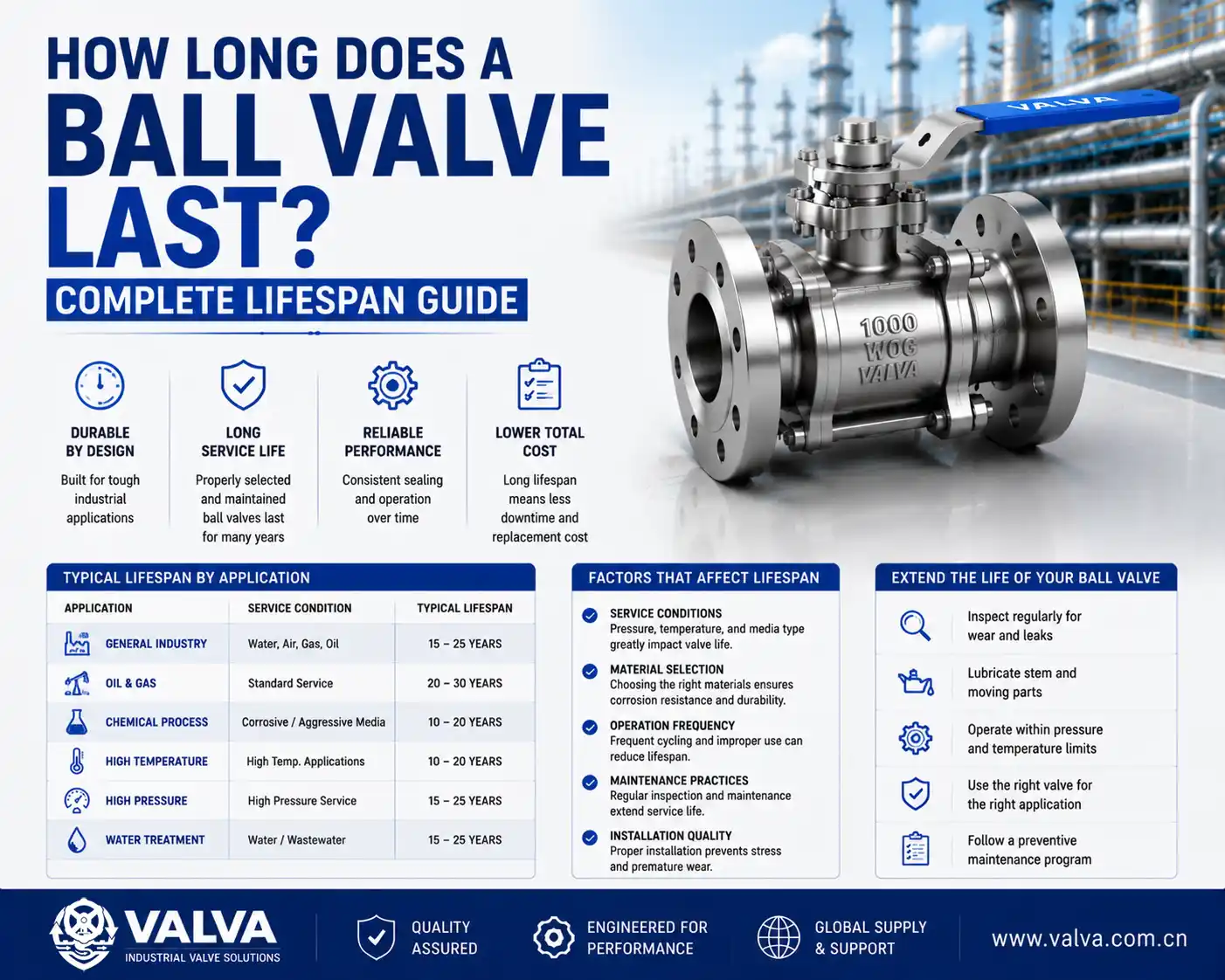
How long does a ball valve last? A high-quality ball valve typically lasts 10 to 20 years in industrial applications. Under ideal operating conditions with proper maintenance, premium stainless steel or forged steel ball valves can remain in service for 25 years or more. However, lifespan depends on factors such as pressure, temperature, operating frequency, fluid type, and maintenance.
Understanding what affects ball valve longevity helps reduce downtime and lower maintenance costs.
Average Ball Valve Lifespan
The service life of a ball valve varies by application.
| Application | Typical Lifespan |
|---|---|
| Residential water systems | 15–25 years |
| Commercial plumbing | 10–20 years |
| Industrial pipelines | 10–20 years |
| Chemical processing | 8–15 years |
| Oil & gas facilities | 10–25 years |
| Marine applications | 8–20 years |
Actual lifespan depends on operating conditions rather than age alone.
Factors That Affect Ball Valve Lifespan
1. Valve Material
Material selection has a major impact on durability.
- Brass – Suitable for water systems
- Carbon steel – Strong but less corrosion resistant
- Stainless steel – Excellent corrosion resistance
- Duplex stainless steel – Ideal for harsh and marine environments
Selecting the correct material significantly extends service life.
2. Operating Pressure
Higher pressure places greater stress on the valve body, seats, and seals.
To maximize lifespan:
- Operate within the valve’s pressure rating.
- Avoid frequent pressure surges.
- Select the correct pressure class for the application.
3. Operating Temperature
Extreme temperatures accelerate wear.
High temperatures may:
- Harden soft seats
- Damage seals
- Reduce lubrication
- Increase thermal stress
Always choose seat and body materials rated for the operating temperature.
4. Process Media
The type of fluid flowing through the valve greatly affects durability.
Media that shorten valve life include:
- Abrasive slurry
- Corrosive chemicals
- Seawater
- High-solid fluids
Corrosion-resistant materials perform better in aggressive environments.
5. Operating Frequency
Every open-and-close cycle causes gradual wear.
Valves used continuously may experience:
- Seat wear
- Stem wear
- Increased operating torque
Selecting valves designed for high-cycle service helps improve longevity.
Signs a Ball Valve Is Near the End of Its Life
Common warning signs include:
- Internal leakage
- External leakage
- Difficult operation
- Corrosion
- Damaged stem
- Worn seats
- Reduced sealing performance
Early inspection helps prevent unexpected failures.
How to Extend Ball Valve Life
Proper maintenance greatly increases valve lifespan.
Recommended practices include:
- Operate the valve regularly.
- Inspect for leaks.
- Clean pipelines to remove debris.
- Replace seals before failure.
- Lubricate moving parts when applicable.
- Use materials compatible with the process media.
- Stay within pressure and temperature limits.
Preventive maintenance is far less expensive than emergency replacement.
When Should You Replace a Ball Valve?
Replacement is recommended if:
- The valve body is cracked.
- Corrosion weakens the valve.
- The ball is deeply scratched.
- Leakage continues after repairs.
- Multiple internal components have failed.
Replacing a severely worn valve improves safety and system reliability.
Can Ball Valves Last More Than 20 Years?
Yes.
Premium industrial ball valves made from stainless steel or forged steel often exceed 20 years of service when:
- Properly installed
- Correctly sized
- Used within design limits
- Maintained on a regular schedule
Many oil, gas, power generation, and water treatment facilities operate quality ball valves for decades.
Conclusion
So, how long does a ball valve last? Most industrial ball valves provide 10 to 20 years of reliable service, while premium models can last 25 years or longer under favorable conditions. Material selection, operating environment, maintenance, and application all influence service life. Regular inspection and preventive maintenance remain the most effective ways to maximize valve longevity.
Frequently Asked Questions
What is the average lifespan of a ball valve?
Most industrial ball valves last between 10 and 20 years, depending on operating conditions and maintenance.
What causes a ball valve to wear out?
Common causes include seat wear, corrosion, abrasive media, high temperatures, excessive pressure, and frequent operation.
How can I make my ball valve last longer?
Use the correct valve material, operate within rated limits, inspect the valve regularly, keep the system clean, and replace worn seals before they fail.
Related Articles
Technical & Design Insights
- What Is a Ball Valve
- How Does a Ball Valve Work
- Different Types of Ball Valves
- Floating vs Trunnion Ball Valve
- Full Port vs Reduced Port Ball Valve
- Top Entry vs Side Entry Ball Valve
- V Port vs Standard Ball Valve
- What Are Ball Valves Used For
- One Piece vs Two Piece Ball Valve
- Two Piece vs Three Piece Ball Valve
- What Are the Different Types of Ball Valves