Direct Answer:
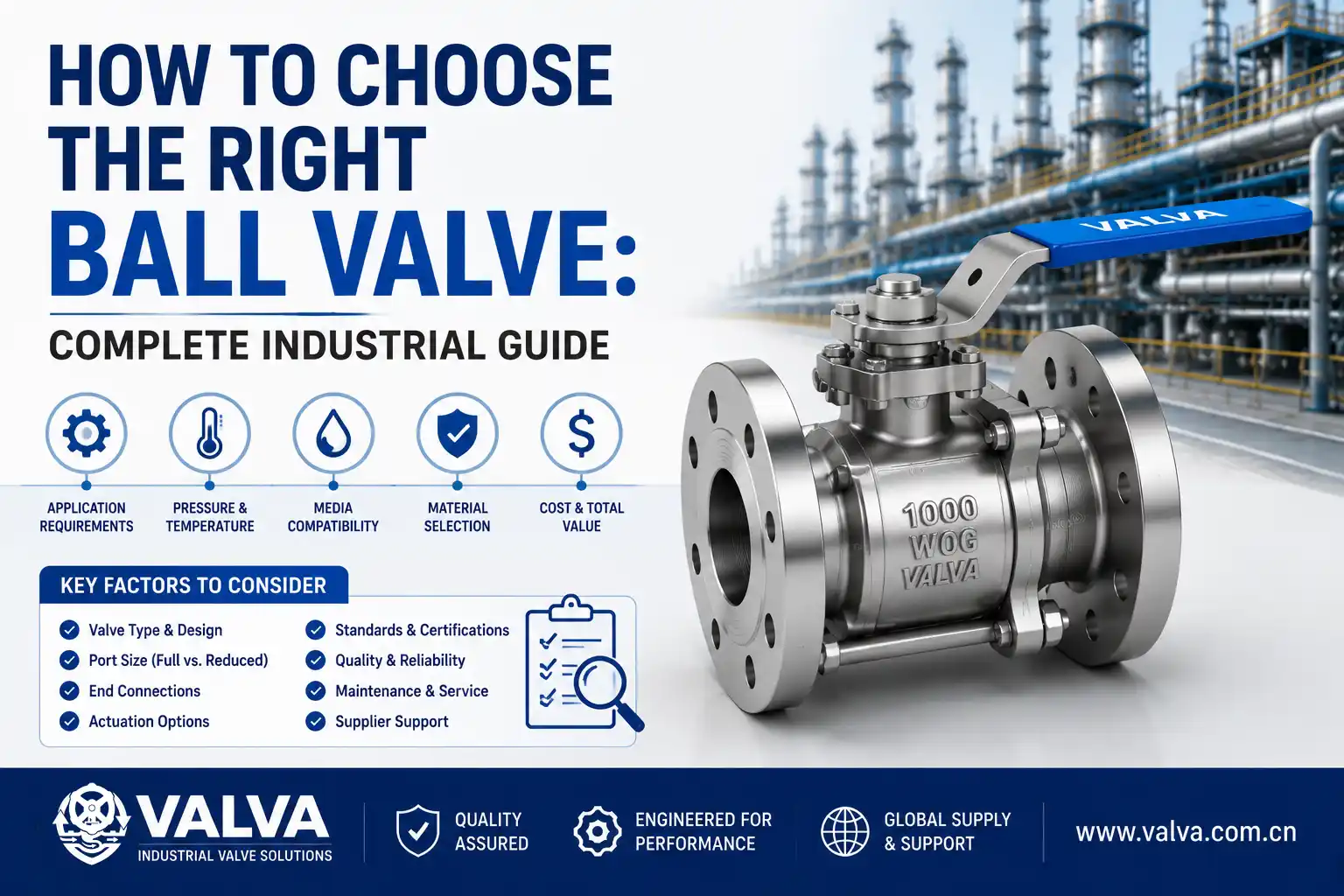
How to choose the right ball valve depends on four core factors: fluid type, pressure and temperature conditions, valve structure (port and body type), and maintenance requirements. Engineers must match valve design and materials to real operating conditions to ensure safety, performance, and long service life.
Understanding how to choose the right ball valve prevents leakage, reduces maintenance costs, and improves pipeline reliability in industrial systems.
Understand Your Fluid Type First
The first step in selecting a ball valve is identifying the working media.
Different fluids require different valve characteristics:
- Clean water → standard soft-seated valves are sufficient
- Oil and gas → high-pressure resistant metal or reinforced seats
- Chemicals → corrosion-resistant materials like stainless steel or duplex
- Slurry or abrasive media → hardened or metal-seated designs
Because fluid properties directly affect wear and corrosion, material selection is critical for long-term performance.
Evaluate Pressure and Temperature Conditions
Pressure and temperature determine valve strength requirements.
Key considerations include:
- Low pressure systems → brass or standard carbon steel valves
- Medium pressure systems → stainless steel or reinforced designs
- High pressure systems → trunnion-mounted or metal-seated valves
- High temperature systems → stainless steel or alloy materials
As temperature increases, material strength decreases. Therefore, engineers must always check pressure–temperature ratings before selection.
Choose the Right Ball Valve Type
Ball valve structure affects flow control and performance.
Common types include:
- Floating ball valve → simple design, suitable for low to medium pressure
- Trunnion mounted ball valve → supports high pressure and large sizes
- V-port ball valve → precise flow control and throttling
- Full port ball valve → minimal pressure loss, maximum flow
- Reduced port ball valve → compact and cost-effective
Each design serves a different industrial function, so selection depends on system requirements.
Select Proper Body Material
Material choice directly affects durability and corrosion resistance.
Common materials include:
- Brass → low-cost, light-duty applications
- Carbon steel → general industrial use
- Stainless steel (304/316/321) → corrosion resistance and chemical systems
- Duplex stainless steel (2205) → high strength and chloride resistance
Material selection should always match the chemical and thermal environment.
Consider Port Design (Flow Performance)
Port design impacts flow efficiency and pressure loss:
- Full port → same diameter as pipeline, minimal pressure drop
- Reduced port → smaller opening, lower cost and compact size
If flow efficiency is critical, full port design is preferred.
Evaluate Maintenance Requirements
Maintenance strategy also influences valve selection:
- One-piece valves → low maintenance, simple systems
- Two-piece valves → moderate service access
- Three-piece valves → easy inline maintenance for process industries
Systems with frequent downtime sensitivity should prioritize maintainability.
Automation and Control Requirements
If the system is automated:
- Electric actuators → remote control and precision
- Pneumatic actuators → fast response and safety systems
Automation compatibility is important in modern industrial plants.
Application-Based Selection Guide
- Water systems → brass or carbon steel ball valves
- Oil & gas pipelines → trunnion or floating steel ball valves
- Chemical industry → stainless steel or alloy valves
- Food & pharmaceutical → stainless steel sanitary valves
- Slurry systems → metal-seated ball valves
Matching application to valve design ensures reliability and safety.
Conclusion
In summary, how to choose the right ball valve depends on balancing fluid type, pressure conditions, material selection, valve structure, and maintenance needs. A properly selected valve improves efficiency, extends service life, and ensures safe industrial operation.
Frequently Asked Questions
What is the most important factor when choosing a ball valve?
Fluid type and operating conditions.
The chemical properties, temperature, and pressure of the medium determine the correct material and valve design.
Can I use one ball valve type for all applications?
No.
Different applications require different valve designs, materials, and pressure ratings. Using a universal valve increases failure risk.
Which ball valve is best for industrial use?
It depends on the system.
Trunnion-mounted stainless steel or metal-seated ball valves are typically preferred for high-pressure and heavy industrial applications.
Related Articles
Technical & Design Insights
- What Is a Ball Valve
- How Does a Ball Valve Work
- Different Types of Ball Valves
- Floating vs Trunnion Ball Valve
- Full Port vs Reduced Port Ball Valve
- Top Entry vs Side Entry Ball Valve
- V Port vs Standard Ball Valve
- What Are Ball Valves Used For
- One Piece vs Two Piece Ball Valve
- Two Piece vs Three Piece Ball Valve
- What Are the Different Types of Ball Valves