Direct Answer:
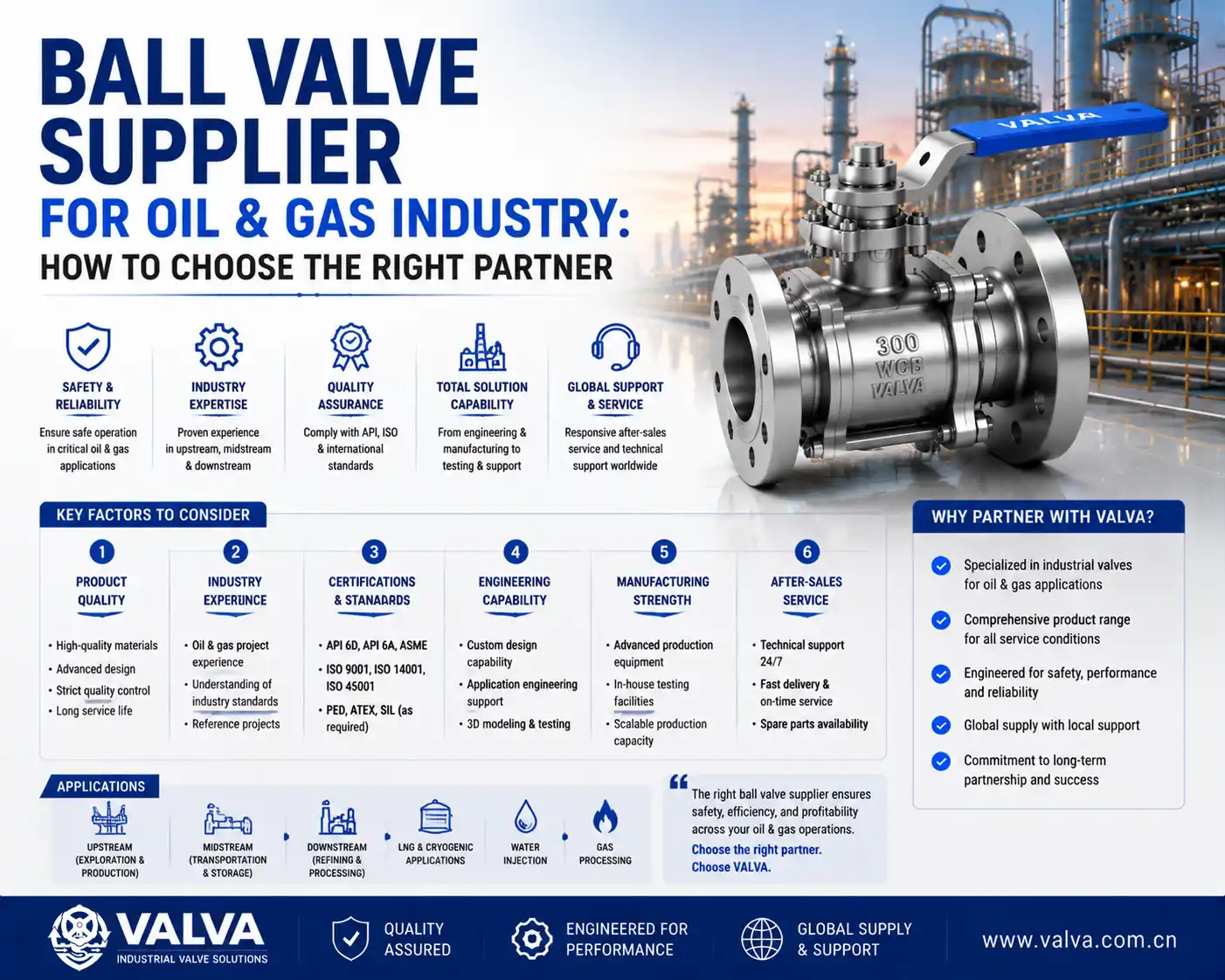
A ball valve supplier for oil and gas industry provides high-pressure, high-temperature, and corrosion-resistant valves designed for upstream, midstream, and downstream oil and gas operations. The right supplier must meet strict standards such as API 6D, API 608, and API 598, while also offering reliable materials, testing, and long-term performance under extreme conditions.
Why Oil and Gas Industry Needs Specialized Ball Valve Suppliers
Oil and gas pipelines operate under extreme conditions.
Key requirements include:
- High pressure resistance
- High temperature stability
- Corrosion resistance (H₂S, CO₂, seawater)
- Zero-leakage performance
- Long service life in remote environments
Therefore, only qualified industrial suppliers can meet these demands.
Key Standards for Oil and Gas Ball Valve Suppliers
A reliable supplier must comply with international standards.
Important certifications and standards:
- API 6D – Pipeline valves standard
- API 608 – Metal ball valve design
- API 598 – Pressure testing and inspection
- ISO 9001 – Quality management system
- NACE MR0175 – Sour gas corrosion resistance
These standards ensure safety and reliability in oil and gas systems.
Material Selection for Oil and Gas Applications
Material choice is critical in harsh environments.
Common materials include:
- Carbon steel (ASTM A216 WCB) – general pipeline use
- Stainless steel (316 / 321) – corrosion resistance
- Duplex stainless steel (2205) – offshore and seawater use
- Super duplex – extreme chloride and high-pressure environments
Proper material selection reduces failure risk and maintenance cost.
Types of Ball Valves Used in Oil and Gas Industry
Different pipeline sections require different valve designs.
Common types include:
- Floating ball valves – small to medium pressure systems
- Trunnion mounted ball valves – high-pressure pipelines
- Full bore ball valves – pigging pipelines
- Top entry ball valves – easy maintenance systems
- Fire-safe ball valves – emergency safety systems
Each type serves specific operational requirements.
What Makes a Good Oil and Gas Ball Valve Supplier
A qualified supplier should offer:
- API-certified manufacturing
- Full material traceability
- High-pressure testing capability
- Offshore and sour gas experience
- OEM/ODM customization capability
- Stable production and delivery capacity
These factors ensure safe and continuous pipeline operation.
Applications in Oil and Gas Industry
Ball valves are widely used in:
- Offshore drilling platforms
- Refinery processing units
- Natural gas transmission pipelines
- LNG plants
- Petrochemical facilities
They provide reliable shut-off and isolation in critical systems.
Quality Testing and Inspection
Industrial ball valves must pass strict testing procedures:
- Hydrostatic shell testing
- Seat leakage testing
- Gas pressure testing (for critical systems)
- Torque testing
- Material chemical analysis
Testing ensures zero-leakage performance before shipment.
How to Choose the Right Supplier
Follow these steps:
- Verify API and ISO certifications
- Check oil & gas project experience
- Review material test certificates (MTC)
- Evaluate production capacity
- Confirm after-sales support
- Ensure compliance with NACE standards
A structured evaluation reduces procurement risk.
Conclusion
A ball valve supplier for oil and gas industry must deliver high-performance, certified, and corrosion-resistant valves that meet strict international standards. Selecting the right supplier ensures pipeline safety, operational efficiency, and long-term reliability in demanding oil and gas environments.
Frequently Asked Questions
What is the most important standard for oil and gas ball valves?
API 6D is the most important standard for pipeline ball valves used in oil and gas transportation systems.
Why are trunnion ball valves used in oil and gas pipelines?
Trunnion ball valves are used because they handle high pressure efficiently and reduce operating torque in large pipeline systems.
What materials are best for offshore oil and gas applications?
Duplex and super duplex stainless steel are best due to their high resistance to chloride corrosion and mechanical stress.
Related Articles
Technical & Design Insights
- What Is a Ball Valve
- How Does a Ball Valve Work
- Different Types of Ball Valves
- Floating vs Trunnion Ball Valve
- Full Port vs Reduced Port Ball Valve
- Top Entry vs Side Entry Ball Valve
- V Port vs Standard Ball Valve
- What Are Ball Valves Used For
- One Piece vs Two Piece Ball Valve
- Two Piece vs Three Piece Ball Valve
- What Are the Different Types of Ball Valves