Direct Answer:
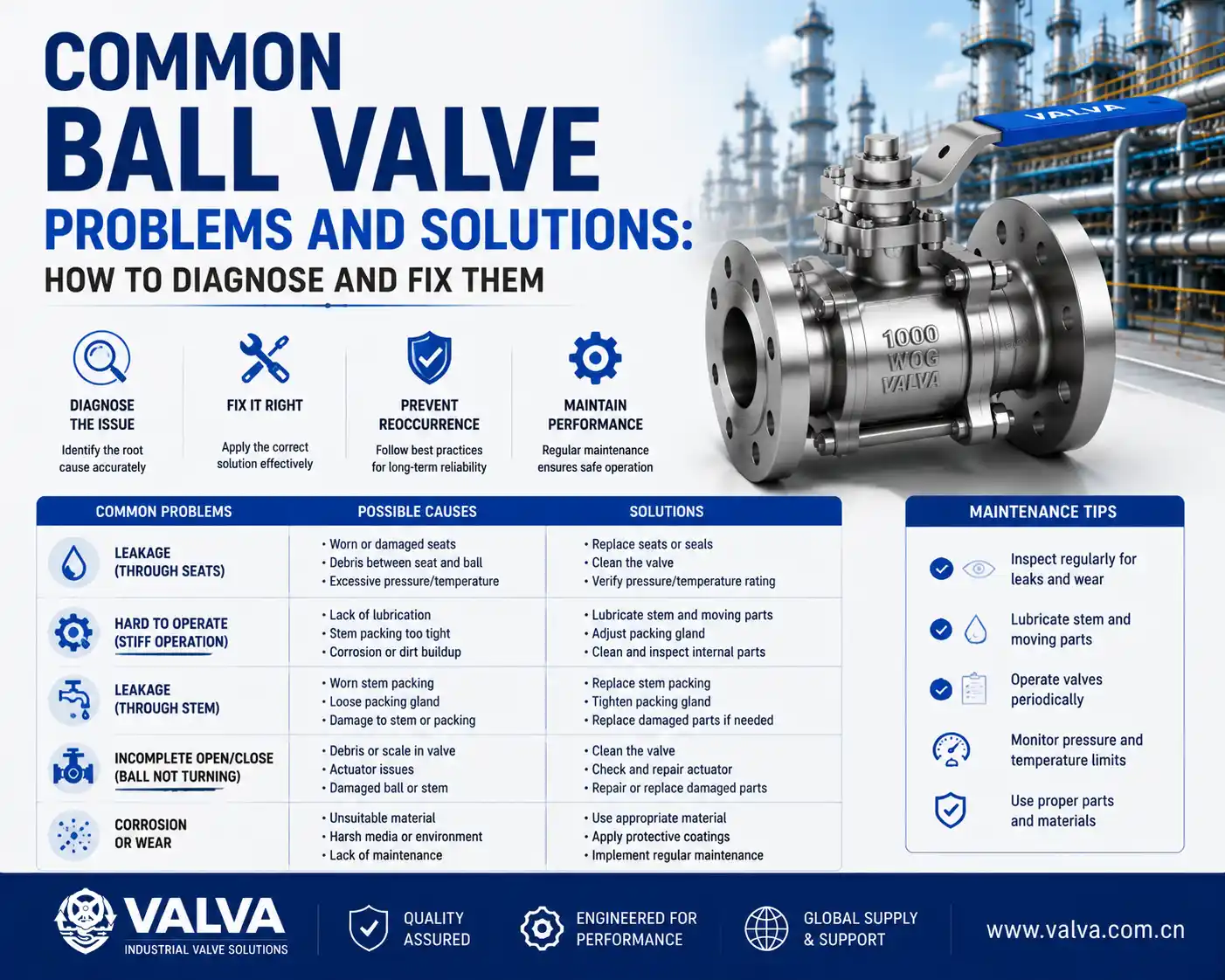
Common ball valve problems include leakage, difficult operation, worn seats, stem seal failure, corrosion, and improper installation. Most issues can be prevented through correct valve selection, regular maintenance, and timely replacement of damaged components.
Understanding these common problems and their solutions helps reduce downtime, improve system safety, and extend the service life of industrial ball valves.
Why Ball Valves Fail
Ball valves are known for their reliability, but they operate under demanding conditions. High pressure, extreme temperatures, corrosive media, and frequent cycling gradually wear internal components.
The most common causes of failure include:
- Normal wear and tear
- Corrosion
- Improper installation
- Contaminated media
- Excessive operating pressure
- Incorrect material selection
Fortunately, many of these problems can be identified before they lead to complete valve failure.
Problem 1: Ball Valve Leaks When Closed
Internal leakage is one of the most common ball valve problems. The valve appears closed, but fluid continues to pass through.
Possible Causes
- Worn valve seats
- Debris trapped between the ball and seat
- Scratched or damaged ball surface
- Excessive seat wear after long-term use
Solutions
- Flush the pipeline to remove debris.
- Inspect the ball for scratches or damage.
- Replace worn seats.
- Replace the valve if the sealing surfaces are severely damaged.
Problem 2: External Leakage Around the Stem
Fluid leaking around the stem usually indicates a sealing problem.
Possible Causes
- Worn stem packing
- Damaged O-rings
- Loose gland nut
- Stem corrosion
Solutions
- Tighten the gland nut if appropriate.
- Replace stem packing or O-rings.
- Inspect the stem for corrosion or wear.
- Replace damaged stem components.
Problem 3: Ball Valve Is Hard to Turn
A ball valve should operate smoothly. If excessive force is required, internal problems may exist.
Possible Causes
- Corrosion
- Scale buildup
- Lack of lubrication
- Damaged stem bearings
- Over-tightened packing
Solutions
- Clean internal deposits.
- Lubricate moving components when applicable.
- Adjust stem packing.
- Replace worn bearings or the stem if necessary.
Problem 4: Valve Cannot Fully Open or Close
Incomplete valve travel reduces flow performance and may cause leakage.
Possible Causes
- Debris inside the valve
- Bent stem
- Damaged ball
- Incorrect actuator adjustment
Solutions
- Remove internal obstructions.
- Inspect and replace damaged internal parts.
- Recalibrate the actuator.
- Verify correct installation.
Problem 5: Seat Wear
Valve seats gradually wear after repeated operation.
Signs
- Reduced sealing performance
- Increased leakage
- Higher operating torque
Solutions
- Replace worn seats.
- Select seat materials suitable for the application.
- Avoid operating beyond the valve’s pressure and temperature ratings.
Problem 6: Corrosion Damage
Corrosion weakens valve components and shortens service life.
Common Causes
- Aggressive chemicals
- Saltwater exposure
- Improper material selection
Solutions
- Upgrade to stainless steel or duplex stainless steel.
- Apply protective coatings where appropriate.
- Select materials based on the process media.
Problem 7: Excessive Operating Torque
If the valve becomes increasingly difficult to operate, excessive torque may damage the actuator or stem.
Possible Causes
- Worn seats
- Corrosion
- Debris buildup
- Misalignment
Solutions
- Inspect internal components.
- Remove contaminants.
- Replace worn parts.
- Verify pipeline alignment.
Preventive Maintenance Tips
Regular maintenance greatly reduces ball valve failures.
Recommended practices include:
- Inspect valves periodically for leaks.
- Exercise valves regularly to prevent sticking.
- Keep pipelines clean to minimize debris.
- Replace seals before they fail.
- Monitor operating pressure and temperature.
- Select materials suitable for the process media.
Preventive maintenance often costs far less than emergency repairs.
When Should You Replace a Ball Valve?
Replacement is usually the best option when:
- The valve body is cracked.
- The ball is deeply scratched.
- Corrosion has weakened structural integrity.
- Multiple internal components have failed.
- Repair costs approach replacement costs.
For critical industrial systems, replacing an aging valve often improves long-term reliability.
Conclusion
Most common ball valve problems involve leakage, difficult operation, seat wear, stem seal failure, corrosion, or installation issues. Regular inspection, proper material selection, and preventive maintenance help avoid unexpected failures and extend valve service life. By identifying problems early, operators can reduce downtime and maintain safe, efficient pipeline operation.
Frequently Asked Questions
Why is my ball valve leaking when it is closed?
Debris, worn valve seats, or a damaged ball usually prevent the valve from sealing completely. Cleaning the valve or replacing worn components often resolves the issue.
Why is my ball valve difficult to turn?
Corrosion, mineral deposits, worn bearings, or excessive stem packing can increase operating torque. Inspection and maintenance usually restore smooth operation.
How long does a ball valve typically last?
A high-quality industrial ball valve can last 10 to 20 years or longer when properly selected, installed, and maintained. Service life depends on operating conditions and maintenance practices.
Related Articles
Technical & Design Insights
- What Is a Ball Valve
- How Does a Ball Valve Work
- Different Types of Ball Valves
- Floating vs Trunnion Ball Valve
- Full Port vs Reduced Port Ball Valve
- Top Entry vs Side Entry Ball Valve
- V Port vs Standard Ball Valve
- What Are Ball Valves Used For
- One Piece vs Two Piece Ball Valve
- Two Piece vs Three Piece Ball Valve
- What Are the Different Types of Ball Valves