
Direct Answer:
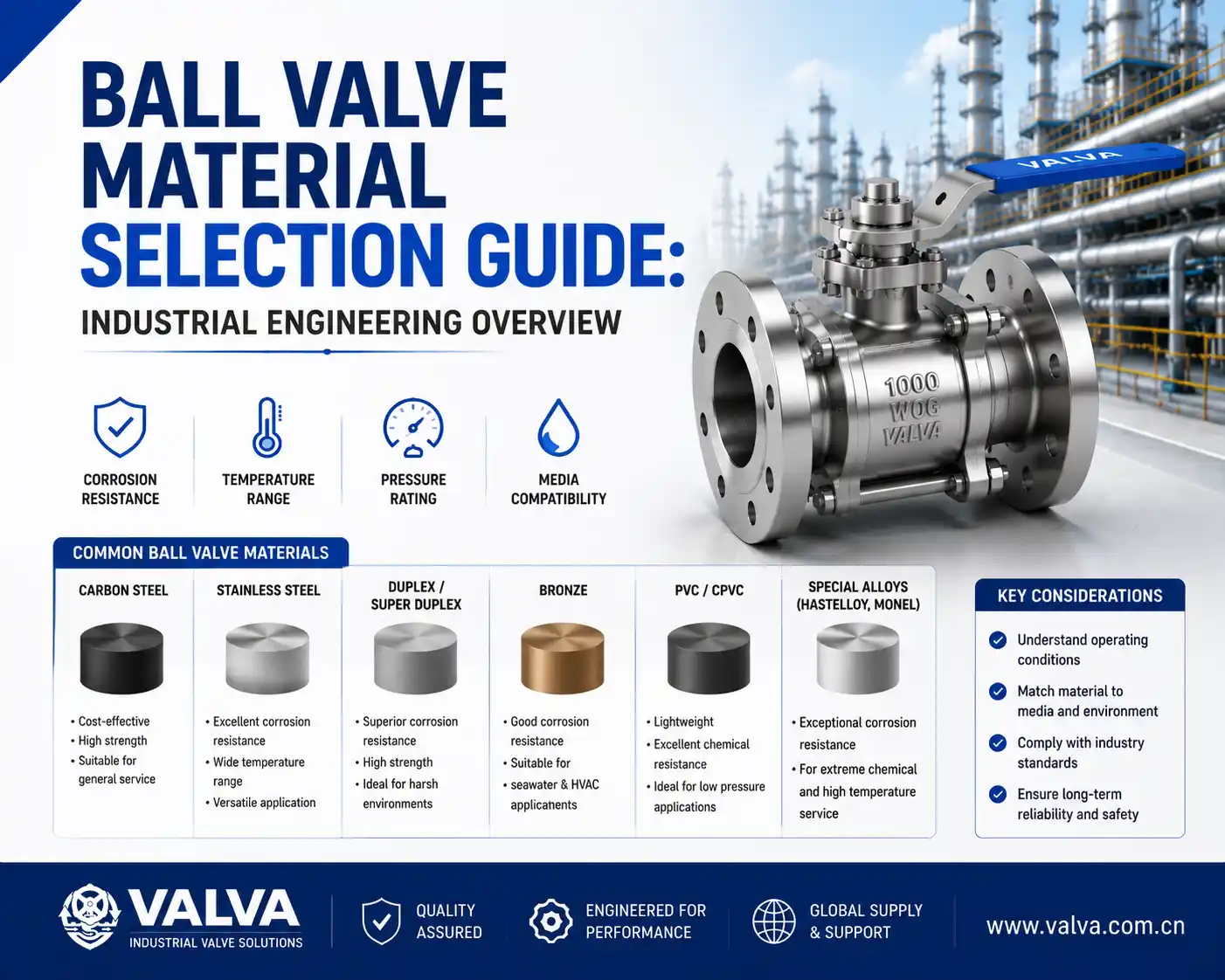
The ball valve material selection guide determines the correct valve body and sealing materials based on fluid type, pressure, temperature, and corrosion conditions. Choosing the right material ensures safe operation, long service life, and stable performance in industrial pipeline systems.
A proper ball valve material selection guide helps engineers prevent corrosion failure, pressure leakage, and premature valve damage.
Why Material Selection Is Critical
Material selection directly affects:
- Corrosion resistance
- Pressure and temperature capability
- Mechanical strength
- Service life
- Maintenance frequency
If the material does not match operating conditions, even a well-designed valve will fail prematurely.
Carbon Steel Ball Valve Materials
Carbon steel (e.g., ASTM A216 WCB) is widely used in industrial applications.
Key characteristics:
- High mechanical strength
- Cost-effective
- Suitable for oil, gas, and steam systems
- Good performance under moderate pressure
Limitations:
- Poor corrosion resistance
- Not suitable for acidic or seawater environments
Therefore, carbon steel is best for non-corrosive industrial pipelines.
Stainless Steel Ball Valve Materials
Stainless steel is widely used in corrosive and chemical environments.
Common grades:
- 304 → general corrosion resistance
- 316 → improved chloride resistance
- 321 → high-temperature stability
Advantages:
- Strong corrosion resistance
- Suitable for chemical processing
- Stable performance under heat
- Long service life
Limitations:
- Higher cost than carbon steel
- Limited resistance in extreme chloride conditions (unless duplex is used)
Duplex Stainless Steel Materials
Duplex stainless steel (e.g., 2205) offers high strength and corrosion resistance.
Key benefits:
- High mechanical strength
- Excellent chloride resistance
- Superior stress corrosion cracking resistance
- Long-term durability in harsh environments
Applications:
- Offshore oil platforms
- Marine pipelines
- Chemical processing plants
- High-pressure systems
Because of its performance, duplex steel is widely used in critical industrial applications.
Brass Ball Valve Materials
Brass is commonly used in low-pressure systems.
Key features:
- Low cost
- Easy machining
- Suitable for water and HVAC systems
Limitations:
- Not suitable for high temperature
- Limited chemical resistance
- Not recommended for industrial corrosive media
Therefore, brass is mainly used in residential and light-duty systems.
Special Alloy Materials
For extreme environments, special alloys are required:
- Inconel
- Hastelloy
- High-grade alloy steels
Advantages:
- Extreme temperature resistance
- Superior chemical stability
- High-pressure capability
Applications:
- Petrochemical plants
- Power generation systems
- High-temperature reactors
These materials are used only in high-end industrial systems due to cost.
Seat Material Selection
Valve performance also depends on seat material:
Soft Seats (PTFE, RPTFE)
- Excellent sealing performance
- Low torque operation
- Suitable for clean fluids
Metal Seats
- High temperature resistance
- Suitable for slurry and abrasive media
- Long mechanical durability
Seat selection must match operating conditions to prevent leakage and wear.
Industry-Based Material Selection
Water Systems
- Brass or stainless steel
- Low corrosion risk
Oil & Gas
- Carbon steel or duplex steel
- High pressure and hydrocarbon resistance
Chemical Industry
- Stainless steel (316/321) or duplex
- Strong corrosion resistance required
Marine Applications
- Duplex stainless steel (2205)
- High chloride resistance required
High Temperature Systems
- Alloy steels or 310S stainless steel
- Thermal stability required
Common Material Selection Mistakes
Avoid these mistakes:
- Using carbon steel in corrosive environments
- Ignoring temperature effects on strength
- Choosing brass for industrial chemical systems
- Overlooking chloride corrosion risks
- Selecting material based only on cost
Correct selection must always prioritize operating conditions.
Conclusion
The ball valve material selection guide shows that proper material choice depends on fluid type, temperature, pressure, and corrosion exposure. Carbon steel, stainless steel, duplex steel, brass, and special alloys each serve different industrial needs. Correct selection improves safety, reliability, and service life.
Frequently Asked Questions
What is the most commonly used ball valve material?
Carbon steel and stainless steel.
Carbon steel is used for general service, while stainless steel is used for corrosive environments.
Which material is best for corrosive applications?
Stainless steel or duplex steel.
Grades like 316 stainless steel and 2205 duplex offer strong resistance to chemical and marine corrosion.
Can brass ball valves be used in industrial systems?
Only for low-pressure applications.
Brass is suitable for water and HVAC systems but not for harsh industrial or chemical environments.
Related Articles
Technical & Design Insights
- What Is a Ball Valve
- How Does a Ball Valve Work
- Different Types of Ball Valves
- Floating vs Trunnion Ball Valve
- Full Port vs Reduced Port Ball Valve
- Top Entry vs Side Entry Ball Valve
- V Port vs Standard Ball Valve
- What Are Ball Valves Used For
- One Piece vs Two Piece Ball Valve
- Two Piece vs Three Piece Ball Valve
- What Are the Different Types of Ball Valves