Direct Answer:
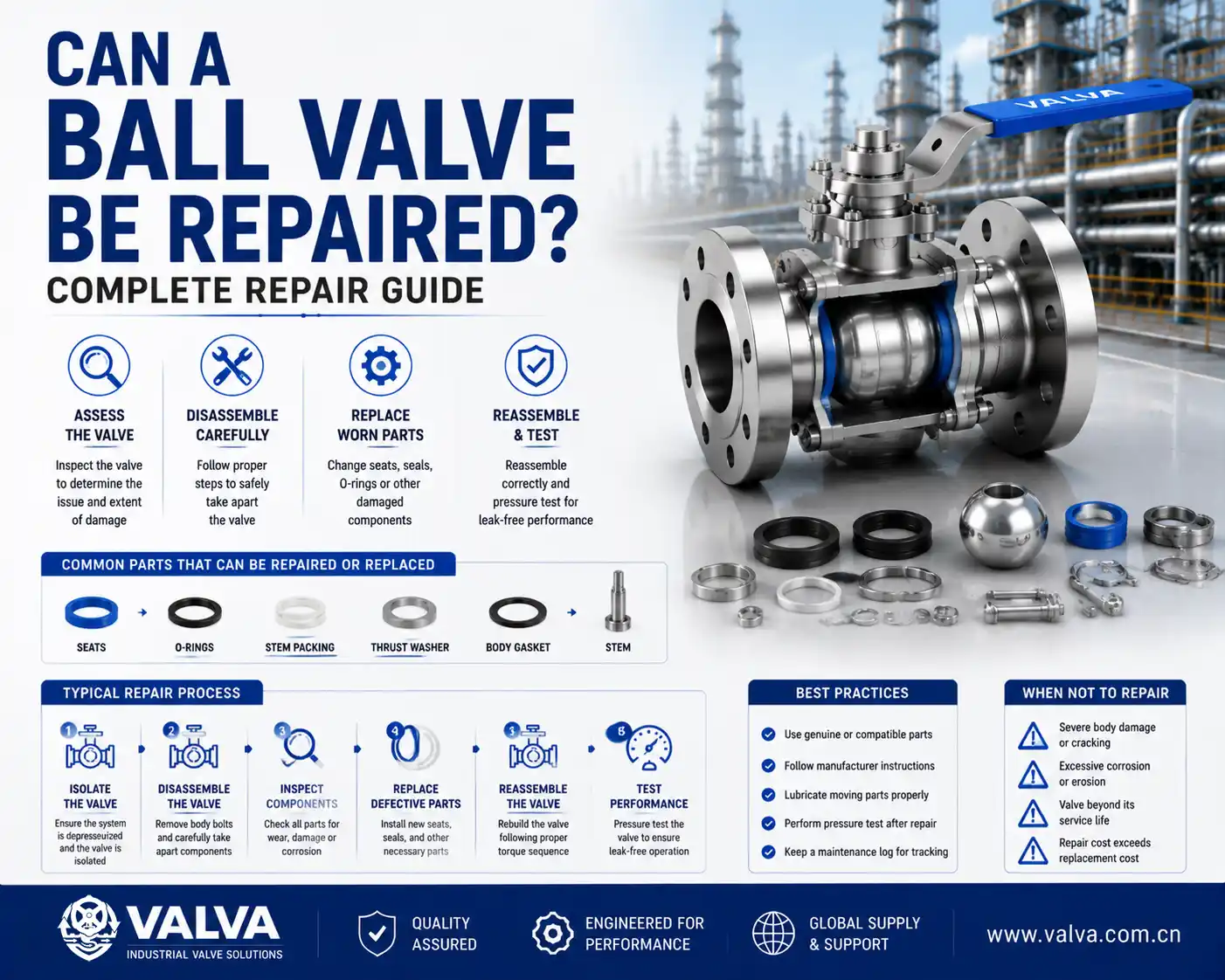
Can a ball valve be repaired? Yes. Many ball valves can be repaired if the damage is limited to replaceable components such as seats, seals, O-rings, stem packing, or the stem. However, if the valve body or ball is cracked, heavily corroded, or severely worn, replacing the entire valve is usually the safest and most cost-effective solution.
Knowing when to repair and when to replace a ball valve can reduce maintenance costs and improve system reliability.
Which Ball Valve Parts Can Be Repaired?
Many industrial ball valves are designed with replaceable internal components.
Common repairable parts include:
- Valve seats
- Stem seals
- O-rings
- Stem packing
- Stem bearings
- Gaskets
- Valve stem
These components naturally wear over time and are often included in repair kits.
Common Ball Valve Problems That Can Be Repaired
1. Seat Wear
Valve seats gradually wear after repeated operation.
Symptoms
- Internal leakage
- Poor shut-off performance
- Higher operating torque
Repair
- Replace the valve seats.
- Inspect the ball for scratches before installing new seats.
2. Stem Seal Leakage
Leaks around the stem are among the most common repairable problems.
Causes
- Worn packing
- Damaged O-rings
- Loose gland nut
Repair
- Tighten the gland nut if necessary.
- Replace stem packing or O-rings.
- Lubricate the stem during reassembly.
3. Difficult Valve Operation
A ball valve may become difficult to turn after years of service.
Causes
- Corrosion
- Dirt buildup
- Worn bearings
- Dry stem
Repair
- Clean internal components.
- Replace worn bearings.
- Lubricate moving parts where applicable.
4. External Leakage
Leaks from flanges or body joints often have simple solutions.
Repair
- Replace damaged gaskets.
- Tighten flange bolts evenly.
- Inspect sealing surfaces for damage.
When Should a Ball Valve Be Replaced Instead?
Repair is not always the best option.
Replace the valve if you find:
- Cracked valve body
- Deep scratches on the ball
- Severe corrosion
- Structural deformation
- Multiple failed components
- Repair costs approaching replacement costs
For high-pressure or safety-critical systems, replacement is often the preferred choice.
Ball Valve Repair Process
A typical repair includes the following steps:
- Isolate and depressurize the pipeline.
- Remove the valve from the system.
- Disassemble the valve carefully.
- Inspect the ball, seats, stem, and seals.
- Replace worn components.
- Clean all internal surfaces.
- Reassemble the valve.
- Perform pressure and leak testing before returning it to service.
Always follow the manufacturer’s maintenance procedures.
Can All Ball Valves Be Repaired?
No.
Repairability depends on the valve design.
Repairable
- Two-piece ball valves
- Three-piece ball valves
- Top-entry ball valves
These designs allow internal components to be replaced.
Usually Not Repairable
- Many one-piece ball valves
- Low-cost residential valves with sealed construction
These valves are generally replaced rather than repaired.
How to Extend Ball Valve Service Life
Preventive maintenance reduces repairs and extends valve life.
Recommended practices include:
- Operate the valve regularly.
- Keep the pipeline clean.
- Replace seals before failure.
- Avoid exceeding pressure and temperature ratings.
- Select materials suitable for the process fluid.
- Inspect valves during scheduled maintenance.
Good maintenance often doubles the service life of industrial ball valves.
Conclusion
So, can a ball valve be repaired? Yes, in many cases. Worn seats, seals, O-rings, packing, and bearings can usually be replaced without changing the entire valve. However, valves with cracked bodies, severe corrosion, or extensive internal damage should be replaced to ensure safe and reliable operation.
Frequently Asked Questions
Can you repair a leaking ball valve?
Yes. Most leaking ball valves can be repaired by replacing worn seats, seals, O-rings, or stem packing, provided the valve body and ball remain in good condition.
Is it cheaper to repair or replace a ball valve?
Repair is usually less expensive when only seals or seats are damaged. Replacement is often more economical if the valve has severe corrosion or structural damage.
How long does a repaired ball valve last?
A properly repaired industrial ball valve can provide many additional years of service when installed correctly and maintained regularly.
Related Articles
Technical & Design Insights
- What Is a Ball Valve
- How Does a Ball Valve Work
- Different Types of Ball Valves
- Floating vs Trunnion Ball Valve
- Full Port vs Reduced Port Ball Valve
- Top Entry vs Side Entry Ball Valve
- V Port vs Standard Ball Valve
- What Are Ball Valves Used For
- One Piece vs Two Piece Ball Valve
- Two Piece vs Three Piece Ball Valve
- What Are the Different Types of Ball Valves