Direct Answer:
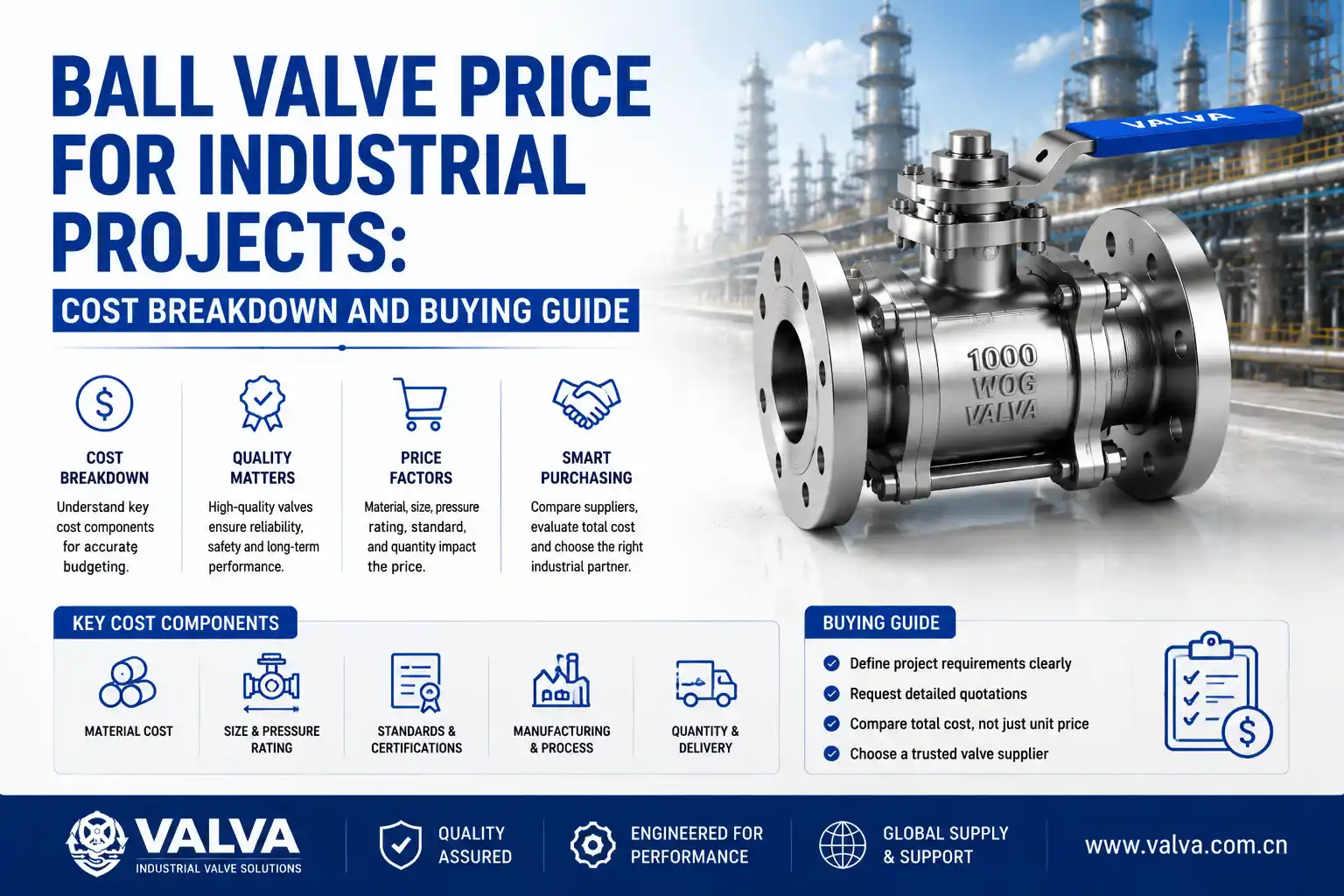
The ball valve price for industrial projects varies widely depending on size, material, pressure rating, and certification requirements. In general, small industrial ball valves can cost a few dozen dollars, while large API-certified stainless steel or duplex ball valves used in oil and gas pipelines can cost hundreds to several thousand dollars per unit.
What Determines Ball Valve Price in Industrial Projects?
Ball valve pricing is not fixed. It depends on engineering and application requirements.
Key factors include:
- Valve size (DN15 to DN600+)
- Material type (carbon steel, stainless steel, duplex)
- Pressure class (Class 150 to Class 1500)
- Design type (floating, trunnion, top entry)
- Certification (API 6D, API 608, CE, ISO)
- Testing requirements (API 598)
Each factor directly affects manufacturing cost.
Price by Material Type
Material is one of the biggest cost drivers.
Typical cost levels:
- Carbon steel ball valves → Low cost
- Stainless steel (304/316/321) → Medium cost
- Duplex stainless steel → High cost
- Special alloy valves → Premium cost
Corrosion resistance and pressure strength significantly increase pricing.
Price by Size (Industrial Range Overview)
Larger valves require more material and machining time.
Typical trend:
- Small size (DN15–DN50) → lowest cost range
- Medium size (DN65–DN150) → moderate cost
- Large size (DN200+) → high cost range
As size increases, cost grows exponentially rather than linearly.
Price by Pressure Class
Pressure rating directly affects valve thickness and design.
- Class 150 → standard cost
- Class 300 → moderate increase
- Class 600 → high increase
- Class 900–1500 → premium industrial cost
Higher pressure requires stronger bodies and more rigorous testing.
Price by Valve Type
Different designs have different manufacturing complexity.
- Floating ball valve → cost-effective
- Trunnion ball valve → higher cost (high pressure)
- Top entry ball valve → premium maintenance design
- Full welded ball valve → high-cost pipeline solution
More complex designs increase engineering and machining cost.
Impact of Certification and Standards
Industrial projects often require certified valves.
Common standards:
- API 6D → pipeline valves
- API 608 → industrial ball valves
- API 598 → pressure testing
- ISO 9001 → quality system
Certification increases cost but ensures safety and compliance.
Typical Industrial Price Ranges (Reference Only)
- Small carbon steel ball valve → low cost range
- Stainless steel industrial valve → mid-range
- API 6D trunnion ball valve → high cost range
- Large duplex steel pipeline valve → premium range
Actual pricing depends on project specification and order volume.
How to Reduce Ball Valve Cost in Projects
Industrial buyers can optimize cost using:
- Bulk ordering
- Standardizing valve sizes
- Selecting appropriate pressure class
- Avoiding unnecessary over-specification
- Working directly with manufacturers
Smart procurement can significantly reduce total project cost.
Conclusion
The ball valve price for industrial projects depends on a combination of size, material, pressure class, design complexity, and certification requirements. Understanding these factors helps engineers and buyers choose cost-effective solutions without compromising safety or performance.
Frequently Asked Questions
Why do ball valve prices vary so much?
Prices vary due to differences in material, size, pressure rating, design type, and certification requirements.
What is the cheapest type of industrial ball valve?
Carbon steel floating ball valves in small sizes (DN15–DN50) are usually the most cost-effective option.
Do certifications increase ball valve price?
Yes. API and ISO certifications increase manufacturing and testing costs but ensure higher safety and reliability.
Related Articles
Technical & Design Insights
- What Is a Ball Valve
- How Does a Ball Valve Work
- Different Types of Ball Valves
- Floating vs Trunnion Ball Valve
- Full Port vs Reduced Port Ball Valve
- Top Entry vs Side Entry Ball Valve
- V Port vs Standard Ball Valve
- What Are Ball Valves Used For
- One Piece vs Two Piece Ball Valve
- Two Piece vs Three Piece Ball Valve
- What Are the Different Types of Ball Valves