
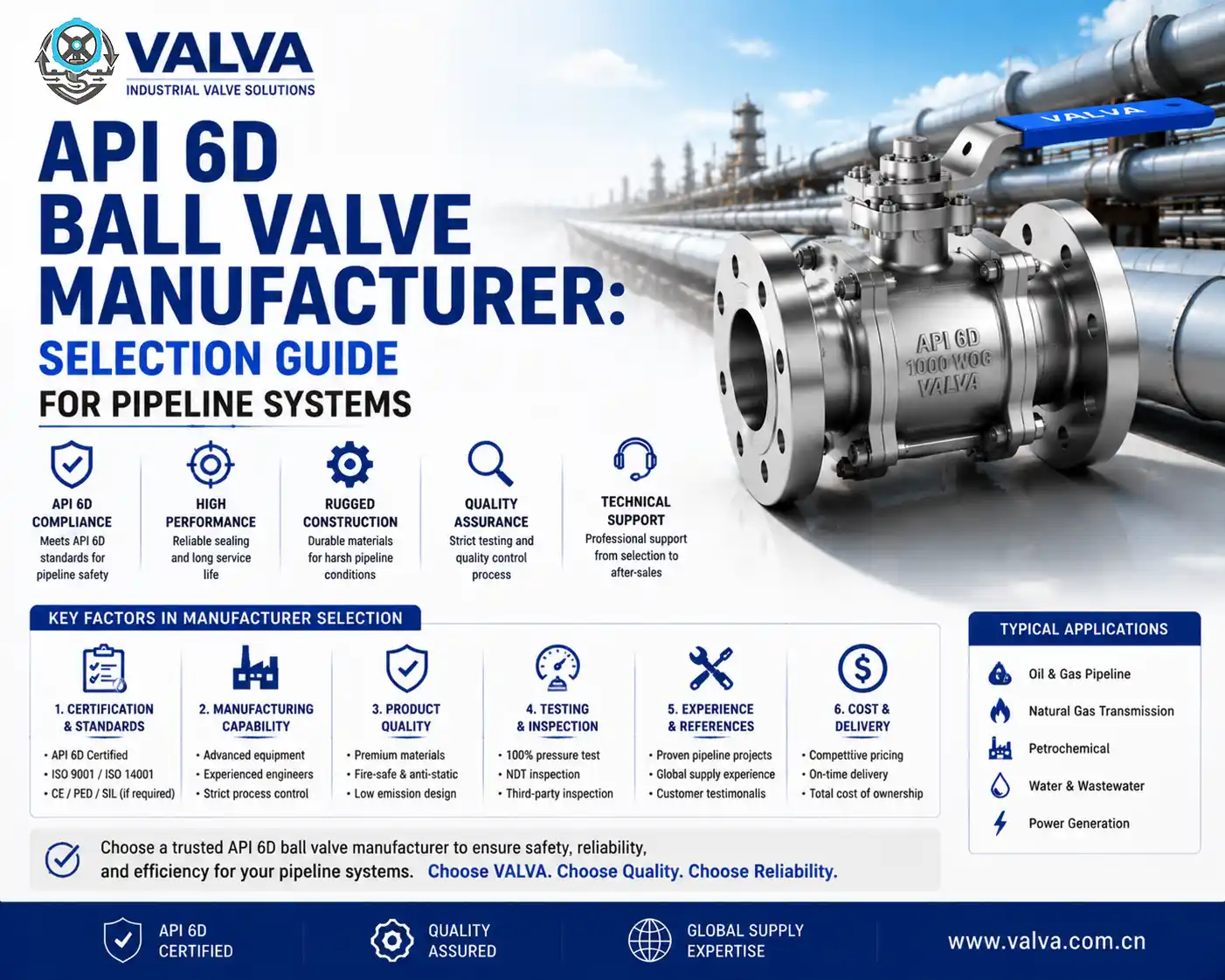
Direct Answer:
An API 6D ball valve manufacturer produces pipeline ball valves that meet API 6D standards for oil, gas, and industrial transmission systems. These manufacturers must ensure high safety performance, zero-leakage sealing, and strict quality control for high-pressure pipeline applications.
Choosing a qualified API 6D ball valve manufacturer is essential for ensuring pipeline integrity, operational safety, and long-term reliability.
What Is an API 6D Ball Valve Manufacturer?
An API 6D ball valve manufacturer designs and produces pipeline valves that comply with the American Petroleum Institute’s API 6D standard.
These valves are mainly used in:
- Oil and gas transmission pipelines
- Natural gas distribution systems
- Refinery and petrochemical networks
- Offshore and onshore pipeline systems
API 6D focuses on pipeline safety, durability, and leak prevention.
Key Requirements of API 6D Ball Valve Manufacturing
To meet API 6D compliance, manufacturers must follow strict requirements:
- Full bore or reduced bore design options
- Fire-safe and anti-static design capability
- Bi-directional sealing performance
- Emergency sealing features
- Full traceability of materials
- Certified pressure testing procedures
These requirements ensure safe operation under extreme conditions.
API 6D Ball Valve Types
A qualified manufacturer typically produces multiple valve types:
- Floating ball valves – small and medium pressure pipelines
- Trunnion mounted ball valves – high-pressure pipeline systems
- Top entry ball valves – easy maintenance and repair
- Welded body ball valves – permanent pipeline installation
- Fire-safe ball valves – emergency shutdown systems
Each type serves specific pipeline engineering needs.
Materials Used in API 6D Ball Valve Manufacturing
Material selection is critical for pipeline safety.
Common materials include:
- Carbon steel (ASTM A216 WCB) – standard pipeline use
- Stainless steel (304 / 316 / 321) – corrosion resistance
- Duplex stainless steel (2205) – offshore and high-pressure use
- Super duplex – extreme corrosive environments
Proper material selection ensures long service life and system reliability.
API 6D vs Other Valve Standards
API 6D focuses specifically on pipeline valves.
Comparison:
- API 6D → pipeline transport systems
- API 608 → industrial general-purpose ball valves
- API 598 → testing and inspection standard
- ASME B16.34 → pressure-temperature design standard
API 6D is the most critical standard for long-distance pipeline systems.
Quality Testing for API 6D Ball Valves
Manufacturers must perform strict testing before delivery:
- Hydrostatic shell testing
- Seat leakage testing
- Gas pressure testing (when required)
- Torque and cycle testing
- Material inspection and traceability checks
These tests ensure zero-leakage performance in pipeline systems.
How to Choose the Right API 6D Ball Valve Manufacturer
When selecting a supplier, evaluate:
- API 6D certification validity
- Production capacity and factory scale
- Engineering and R&D capability
- Material traceability system
- Export experience and project references
- Quality control procedures
A qualified manufacturer ensures long-term pipeline safety and performance.
Applications of API 6D Ball Valves
These valves are widely used in:
- Natural gas transmission pipelines
- Crude oil transportation systems
- LNG facilities
- Petrochemical plants
- Offshore drilling platforms
They provide reliable isolation and flow control in critical systems.
Conclusion
An API 6D ball valve manufacturer plays a critical role in ensuring safe and efficient pipeline operations. By meeting strict API 6D standards, using certified materials, and performing rigorous testing, these manufacturers deliver valves that perform reliably in oil, gas, and industrial pipeline systems.
Frequently Asked Questions
What does API 6D mean for ball valves?
API 6D is a pipeline valve standard that defines design, manufacturing, testing, and safety requirements for valves used in oil and gas transmission systems.
Why are API 6D ball valves important?
They ensure leak-free performance, high safety standards, and reliable operation in high-pressure pipeline systems.
What is the difference between API 6D and API 608?
API 6D applies to pipeline valves, while API 608 applies to general industrial ball valves used in process systems.
Related Articles
Technical & Design Insights
- What Is a Ball Valve
- How Does a Ball Valve Work
- Different Types of Ball Valves
- Floating vs Trunnion Ball Valve
- Full Port vs Reduced Port Ball Valve
- Top Entry vs Side Entry Ball Valve
- V Port vs Standard Ball Valve
- What Are Ball Valves Used For
- One Piece vs Two Piece Ball Valve
- Two Piece vs Three Piece Ball Valve
- What Are the Different Types of Ball Valves