
Direct Answer
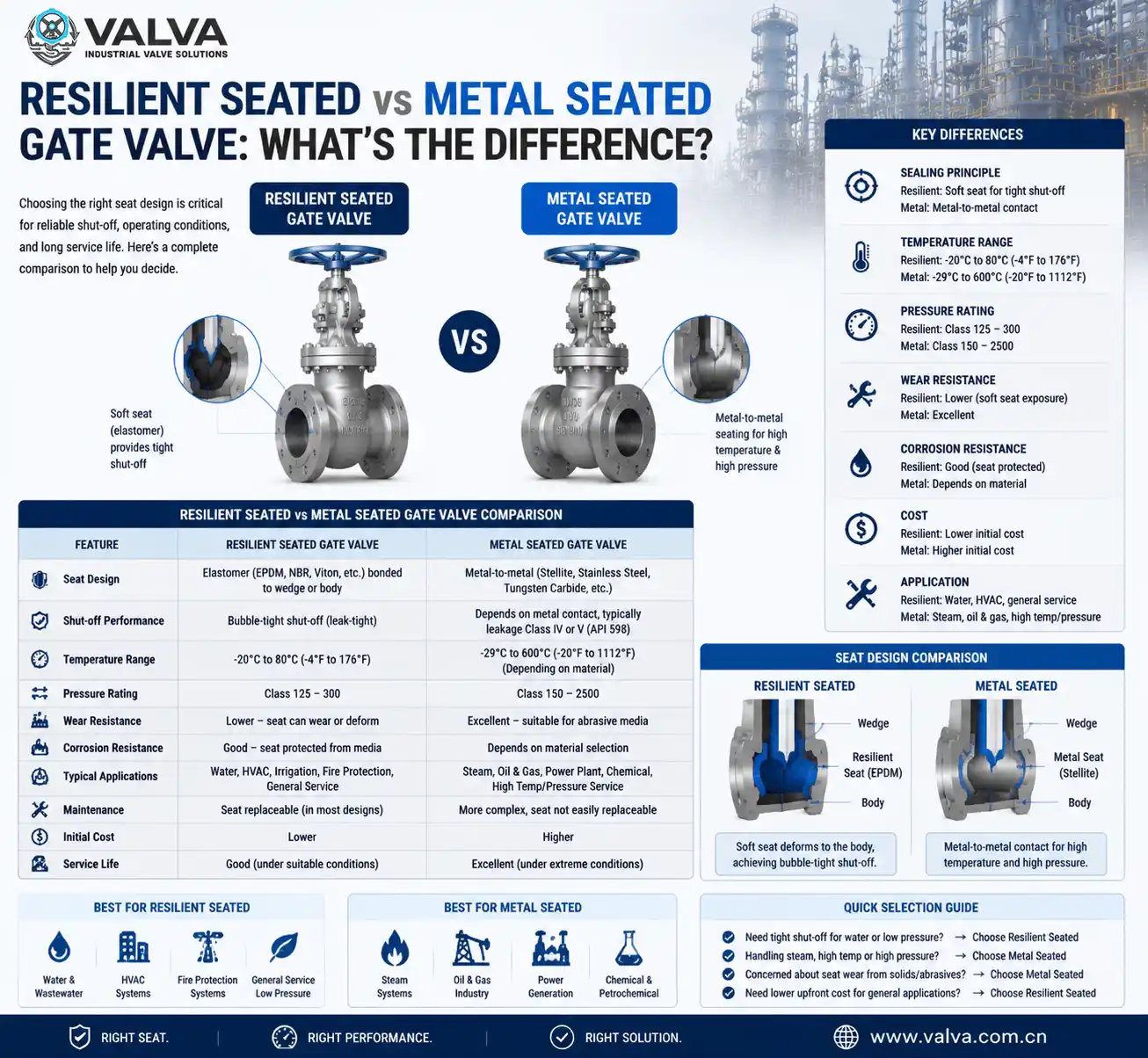
The resilient vs metal seated gate valve comparison helps engineers select the correct valve based on sealing performance, operating temperature, and abrasion resistance. Resilient seated valves deliver bubble-tight sealing in clean water systems. In contrast, metal seated valves deliver durability in high-temperature, abrasive, and corrosive industrial environments.
Introduction
Engineers select gate valves based on operating conditions rather than cost alone. Resilient seated valves work best in clean water and low-temperature systems. However, metal seated valves perform better in demanding industrial services. Therefore, understanding their structural differences improves system reliability and reduces maintenance risk.
Sealing Performance Comparison
Resilient seated gate valves use an elastomer-coated wedge. When the valve closes, the elastomer compresses against the valve body and creates a bubble-tight seal. Engineers often use this design in municipal water systems, HVAC systems, and fire protection lines because it prevents leakage effectively.
Metal seated gate valves use precision-machined metal-to-metal contact surfaces. These surfaces maintain sealing performance under harsh operating conditions. However, they may allow minimal leakage under strict test environments. In contrast, they perform better in high-pressure and high-temperature applications where elastomers fail.
Temperature Limits and Material Behavior
Resilient seated gate valves operate efficiently in low to moderate temperature systems. Engineers typically apply them in environments below 120°C. However, elastomer materials degrade when exposed to excessive heat. Therefore, system designers avoid using them in steam or high-temperature pipelines.
Metal seated gate valves handle extreme temperatures effectively. Engineers select stainless steel, duplex stainless steel, or heat-resistant alloys to ensure stability. As a result, these valves operate reliably in steam systems, refineries, and petrochemical plants.
Abrasion and Wear Resistance
Resilient seated valves perform well in clean fluid systems. However, abrasive media such as sand or slurry gradually damage the elastomer surface. Consequently, sealing performance decreases over time.
Metal seated gate valves resist abrasion effectively. Hardened metal surfaces maintain structural integrity even under continuous particle flow. Therefore, engineers use these valves in mining, wastewater, and chemical processing systems.
Industrial Applications
Resilient seated gate valves serve key roles in:
- Municipal water distribution systems
- Fire protection networks
- HVAC pipelines
- Irrigation systems
In contrast, metal seated gate valves serve industrial environments such as:
- Oil and gas processing
- Steam power plants
- Chemical industries
- Mining operations
- High-temperature pipelines
Engineers select valve types based on fluid type, temperature, and maintenance strategy. Therefore, correct selection improves long-term system stability.
Key Selection Guidance
Engineers should evaluate operating temperature, pressure rating, and fluid composition before selecting a valve type. Resilient seated valves offer cost-effective sealing for clean systems. However, metal seated valves provide long-term durability in harsh environments.
In addition, lifecycle cost analysis often shows that metal seated valves perform better in heavy-duty applications despite higher initial cost.
Conclusion
The resilient vs metal seated gate valve comparison shows a clear engineering distinction. Resilient seated valves deliver superior sealing in clean water systems. Meanwhile, metal seated valves deliver long-term reliability in high-temperature and abrasive industrial environments.
Therefore, engineers must match valve design with operating conditions to ensure safety, efficiency, and long service life.
Frequently Asked Questions (FAQ)
Which valve provides better sealing performance?
Resilient seated gate valves provide bubble-tight sealing in clean water systems because the elastomer wedge compresses tightly against the valve body. Metal seated valves prioritize durability in extreme conditions.
Can resilient seated gate valves handle high temperatures?
Engineers do not recommend resilient seated valves for high-temperature service. Heat damages elastomer materials. Therefore, metal seated valves perform better in steam and refinery applications.
Why are metal seated gate valves used in abrasive systems?
Metal seated gate valves resist wear because hardened metal surfaces withstand continuous particle impact. As a result, engineers use them in slurry, mining, and wastewater systems.
How do engineers choose between these two valve types?
Engineers evaluate temperature, pressure, fluid type, and maintenance requirements. Therefore, correct selection depends on system operating conditions rather than cost alone.
Related Articles
Technical & Design Insights
- How Industrial Gate Valve Works
- Industrial Gate Valve Uses
- Wedge Gate Valve Design Explained
- Wedge vs Slab Gate Valve
- Resilient vs Metal Seated Gate Valve
- High Pressure vs Standard Gate Valve
- Bolted Bonnet vs Welded Bonnet Gate Valve
- Cryogenic vs High Temperature Gate Valve
- Flange vs Threaded Connection Gate Valve
Selection & Sizing
Materials & Standards
Maintenance & Operation
Commercial & Purchasing Topics
- Where to Buy High Quality Industrial Gate Valves Wholesale
- Industrial Gate Valve Price List DN50 DN100
- Custom Industrial Gate Valve Manufacturer Oil Gas Pipeline
- Fast Delivery Industrial Gate Valve Supplier Bulk Order
- Electric Actuator Gate Valve Set Price
- Industrial Gate Valve Export Supplier CE ISO
- Low MOQ Industrial Gate Valve Supplier
- Industrial Gate Valve Bulk Warranty
- Industrial Gate Valve Shipping Lead Time