
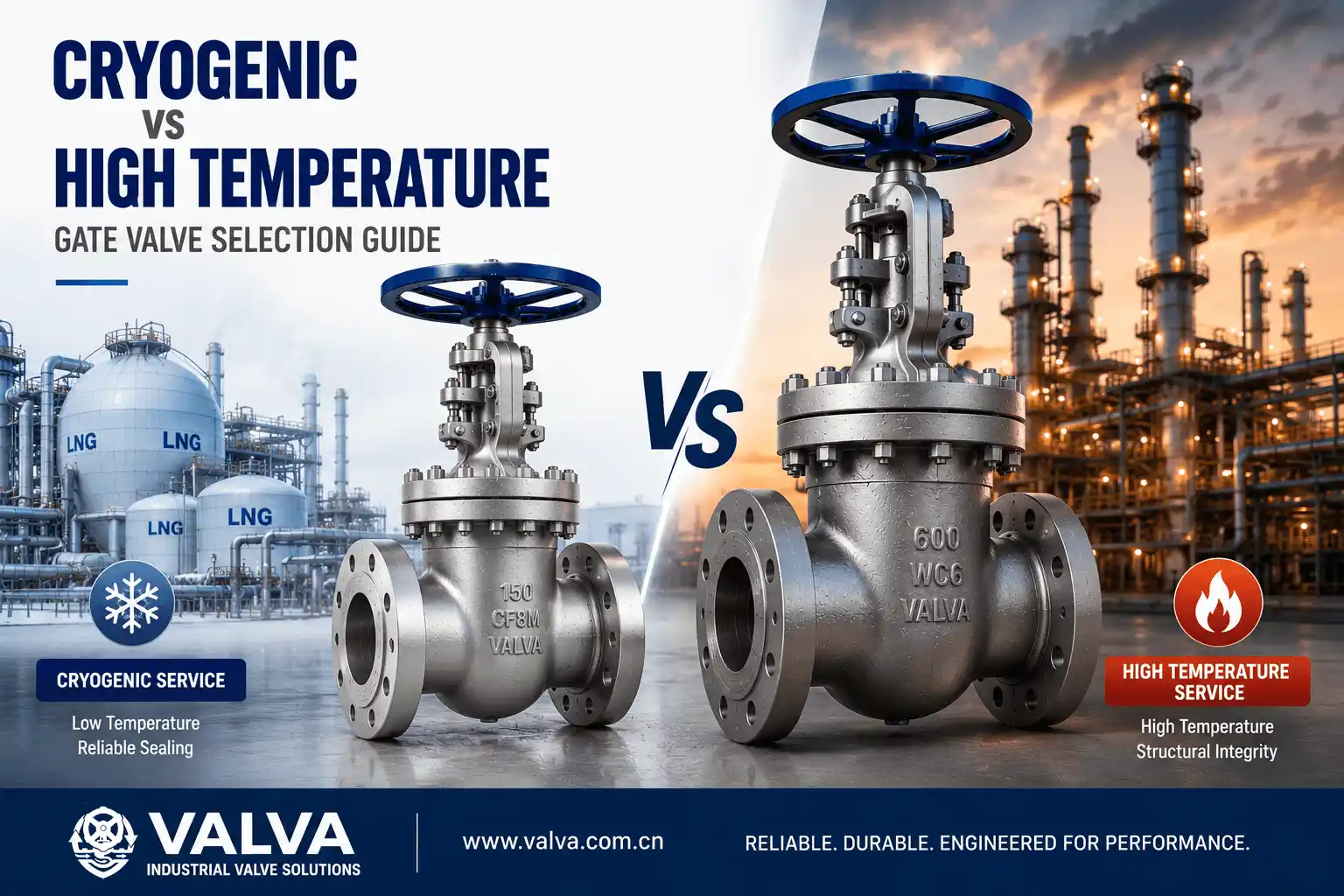
Direct Answer
When comparing a cryogenic vs high temperature gate valve application, engineers evaluate operating temperature, material properties, bonnet configuration, sealing performance, thermal expansion behavior, and pressure conditions.
Cryogenic gate valves typically serve LNG, liquid nitrogen, liquid oxygen, and other liquefied gas systems operating at temperatures as low as -196°C. These valves require extended bonnets and materials that maintain impact toughness at extremely low temperatures.
High-temperature gate valves, by contrast, operate in refineries, power plants, steam systems, and petrochemical facilities where thermal expansion, oxidation resistance, and creep strength become critical design considerations.
Therefore, selecting the correct valve requires engineers to match the valve design, materials, and sealing system to the thermal conditions of the process.
Why Cryogenic and High-Temperature Gate Valves Require Different Designs
Although both valve types perform isolation functions, extreme low-temperature and high-temperature services create very different engineering challenges.
Cryogenic systems expose valve components to temperatures where many conventional materials lose ductility and become brittle. Consequently, cryogenic gate valves require specialized materials and extended bonnet designs that help protect stem packing from direct exposure to cryogenic fluids.
High-temperature systems create the opposite challenge. As temperatures increase, valve components expand, and prolonged exposure to heat can reduce material strength. Therefore, engineers must account for thermal expansion, oxidation resistance, and creep behavior when specifying valves for elevated-temperature service.
As a result, manufacturers design cryogenic and high-temperature gate valves using different construction methods, sealing systems, and material selections.
Quick Selection Guide
Choose a Cryogenic Gate Valve If:
- The service involves LNG, liquid oxygen, liquid nitrogen, or other liquefied gases
- Operating temperatures fall below -50°C
- Low-temperature impact resistance is required
- Stem packing must remain above cryogenic temperatures
- Industry standards require cryogenic testing and certification
Choose a High-Temperature Gate Valve If:
- Process temperatures exceed 425°C
- Thermal expansion may affect valve operation
- Oxidation resistance is critical
- Steam, refinery, or petrochemical service is involved
- Long-term thermal stability is required
In many industrial facilities, engineers install both valve types in different process areas because each design addresses a specific thermal challenge.
Cryogenic vs High Temperature Gate Valve Comparison
| Performance Factor | Cryogenic Gate Valve | High-Temperature Gate Valve |
|---|---|---|
| Operating Temperature | Down to -196°C | Up to 1100°C (material dependent) |
| Primary Challenge | Material brittleness | Thermal expansion and creep |
| Bonnet Design | Extended bonnet | Standard or extended bonnet |
| Material Focus | Impact toughness | Oxidation resistance |
| Packing Protection | Critical | Important |
| Typical Applications | LNG, LOX, LIN | Refineries, power plants |
| Testing Requirements | Cryogenic testing | Elevated-temperature verification |
Cryogenic Gate Valve Design Requirements
Cryogenic service requires specialized valve construction because extremely low temperatures can significantly affect material behavior.
One of the most important design features is the extended bonnet. This elongated section separates the stem packing area from the cryogenic fluid. As the fluid moves upward, a portion vaporizes and forms a thermal buffer zone. Consequently, the packing remains at a significantly higher temperature than the process media.
In addition, engineers select materials that retain toughness at low temperatures. Austenitic stainless steels are common choices because they maintain ductility under cryogenic conditions.
Cryogenic valves may also include cavity pressure-relief features. When liquefied gases become trapped inside a closed valve body, even a small temperature increase can generate significant pressure. Therefore, pressure-relief provisions help protect the valve from internal overpressure.
For these reasons, cryogenic gate valves differ substantially from standard industrial gate valves.
High-Temperature Gate Valve Design Requirements
High-temperature service presents a different set of engineering concerns.
As temperatures increase, valve bodies, wedges, stems, and seats expand. If engineers fail to account for this expansion, thermal binding may occur. In such cases, the wedge can become difficult to operate or may seize within the valve body.
To address this challenge, many high-temperature gate valves utilize flexible wedges or split-disc configurations. These designs accommodate thermal expansion more effectively than rigid components.
Furthermore, prolonged exposure to elevated temperatures can reduce material strength through creep. Creep occurs when materials slowly deform under stress over long periods. Therefore, material selection becomes a critical part of valve design.
Engineers must also evaluate oxidation resistance, especially in steam systems and refinery applications where temperatures remain elevated for extended periods.
As a result, high-temperature gate valves often require specialized alloys and construction methods that differ significantly from those used in cryogenic service.
Material Selection for Thermal Extremes
Material selection often determines whether a valve will perform reliably throughout its service life.
For cryogenic applications, engineers commonly specify austenitic stainless steels because they maintain impact toughness at extremely low temperatures. These materials help reduce the risk of brittle fracture during operation.
For elevated-temperature applications, engineers frequently select materials such as 310S stainless steel because of its oxidation resistance and ability to maintain strength at high temperatures. Other materials, including 321 stainless steel and certain high-temperature alloys, may also be suitable depending on the process conditions.
Before selecting a valve material, engineers typically evaluate:
- Operating temperature
- Working pressure
- Media chemistry
- Thermal cycling frequency
- Corrosion potential
- Mechanical loading
- Expected service life
Therefore, successful valve selection requires engineers to consider material performance and valve design together.
How Engineers Evaluate Cryogenic vs High Temperature Gate Valve Applications
Valve selection rarely depends on temperature alone. Instead, engineering teams assess the complete operating environment before specifying a valve.
First, the process media and operating temperature range establish the basic design requirements. LNG and industrial gas systems often require cryogenic configurations, whereas refinery and steam applications typically require high-temperature designs.
Next, pressure conditions and thermal cycling frequency influence material selection and sealing performance. In many facilities, these factors have a direct impact on long-term reliability.
Beyond operating conditions, industry standards and testing requirements also play an important role. For example, LNG facilities may require cryogenic qualification testing, while power plants often focus on thermal stability and creep resistance.
Maintenance considerations matter as well. Spare-part availability, inspection intervals, and expected service life can significantly affect lifecycle costs.
Ultimately, successful valve selection results from evaluating all of these factors together rather than focusing on temperature alone.
Industry Standards and Engineering References
Several international standards help guide cryogenic and high-temperature valve selection.
Common references include:
- API 600
- API 598
- ASME B16.34
- ASME B16.10
- ISO 5208
- BS 6364 (Cryogenic Valves)
According to API and ASME standards, valve design must satisfy pressure, temperature, material, and testing requirements appropriate for the intended service.
In addition, BS 6364 establishes specific requirements for cryogenic valve performance and testing.
Compliance with these standards improves safety, reliability, and long-term operational performance.
Real-World Application Examples
LNG Facilities
Liquefied natural gas systems operate at extremely low temperatures. Therefore, engineers commonly specify cryogenic gate valves with extended bonnets and low-temperature-qualified materials.
Air Separation Plants
Air separation facilities handle liquid oxygen, liquid nitrogen, and liquid argon. Consequently, cryogenic valve performance plays a critical role in maintaining system safety and reliability.
Refinery Process Units
Refinery systems frequently expose valves to elevated temperatures. As a result, engineers often specify flexible-wedge gate valves and heat-resistant materials.
Steam Power Plants
Power generation facilities use high-temperature steam systems that require materials capable of resisting creep and thermal expansion effects over long operating periods.
Advantages and Limitations
Cryogenic Gate Valve Advantages
- Suitable for extremely low temperatures
- Extended bonnet protects stem packing
- Materials maintain low-temperature toughness
- Compatible with LNG and industrial gas systems
Cryogenic Gate Valve Limitations
- Higher manufacturing complexity
- Additional testing requirements
- More specialized maintenance procedures
High-Temperature Gate Valve Advantages
- Suitable for elevated-temperature service
- Flexible wedge designs reduce thermal binding risk
- High-temperature alloys improve durability
- Commonly used in refinery and power applications
High-Temperature Gate Valve Limitations
- Thermal expansion requires careful design
- Material costs may increase
- Long-term creep must be considered
Key Takeaways
Cryogenic and high-temperature gate valves address different engineering challenges.
Choose a cryogenic gate valve when operating temperatures fall below freezing and low-temperature toughness becomes critical. Extended bonnets, cryogenic materials, and pressure-relief provisions often play important roles in these applications.
Choose a high-temperature gate valve when thermal expansion, oxidation resistance, and creep strength become primary concerns. Flexible wedge designs and heat-resistant materials help improve long-term reliability.
Ultimately, the best valve depends on the operating temperature, process media, pressure conditions, material requirements, and applicable industry standards.
Frequently Asked Questions
What happens if a standard gate valve is used in cryogenic service?
A standard gate valve may experience brittle fracture, packing performance issues, and reduced operational reliability because conventional materials often lose toughness at cryogenic temperatures.
Why are extended bonnets used in cryogenic gate valves?
Extended bonnets help isolate the stem packing area from cryogenic fluids. As a result, the packing remains at a higher temperature and maintains sealing performance.
Why do high-temperature gate valves use flexible wedges?
Flexible wedges accommodate thermal expansion more effectively than rigid designs. Consequently, they help reduce the risk of thermal binding during operation.
How does temperature affect gate valve material selection?
Temperature directly influences toughness, strength, creep resistance, and oxidation resistance. Therefore, engineers select materials based on the expected operating conditions and service environment.
Related Articles
Technical & Design Insights
- How Industrial Gate Valve Works
- Industrial Gate Valve Uses
- Wedge Gate Valve Design Explained
- Wedge vs Slab Gate Valve
- Resilient vs Metal Seated Gate Valve
- High Pressure vs Standard Gate Valve
- Bolted Bonnet vs Welded Bonnet Gate Valve
- Cryogenic vs High Temperature Gate Valve
- Flange vs Threaded Connection Gate Valve
Selection & Sizing
Materials & Standards
Maintenance & Operation
Commercial & Purchasing Topics
- Where to Buy High Quality Industrial Gate Valves Wholesale
- Industrial Gate Valve Price List DN50 DN100
- Custom Industrial Gate Valve Manufacturer Oil Gas Pipeline
- Fast Delivery Industrial Gate Valve Supplier Bulk Order
- Electric Actuator Gate Valve Set Price
- Industrial Gate Valve Export Supplier CE ISO
- Low MOQ Industrial Gate Valve Supplier
- Industrial Gate Valve Bulk Warranty
- Industrial Gate Valve Shipping Lead Time