
Direct Answer
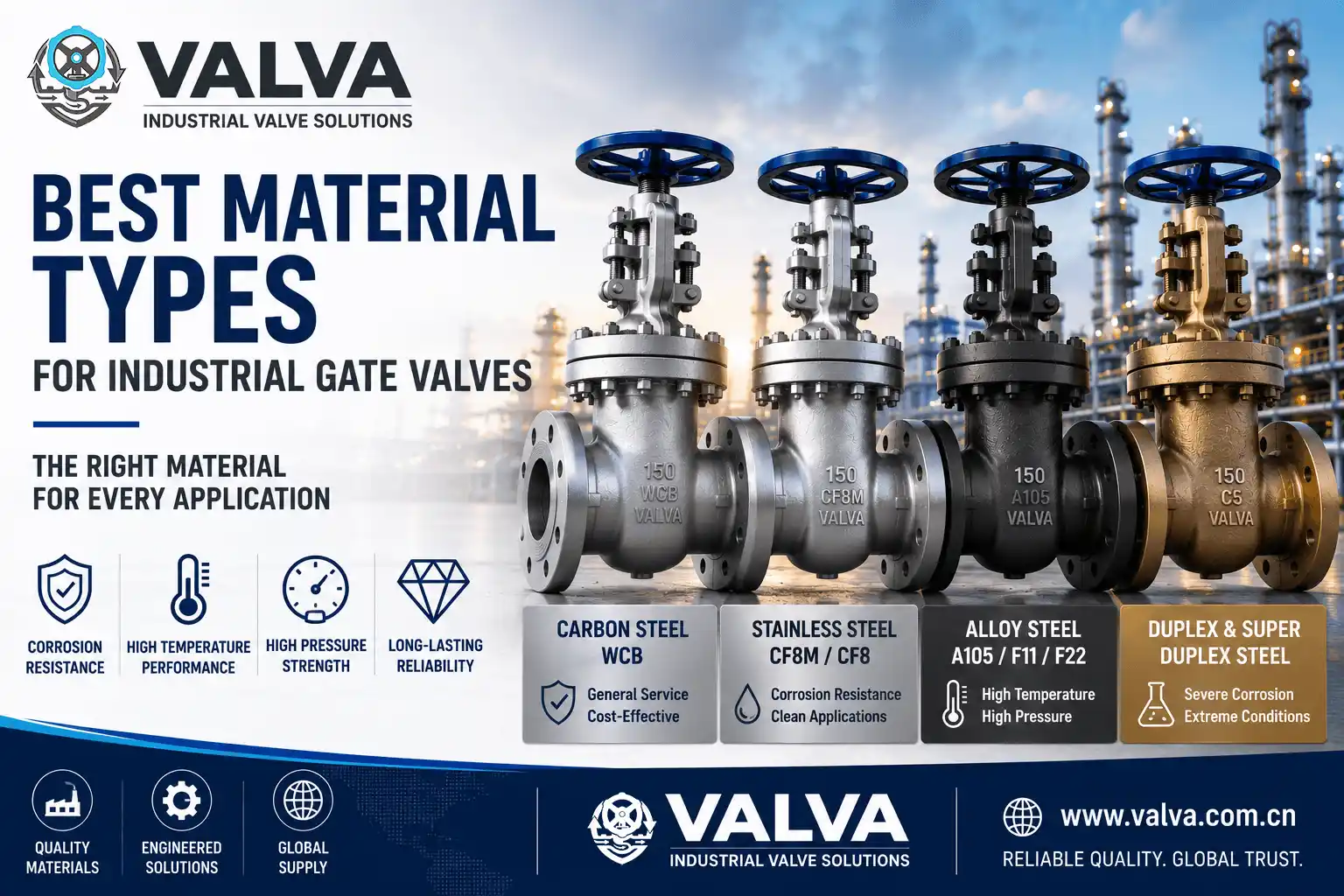
The best material types for industrial gate valves include carbon steel for general industrial use, stainless steel for corrosive and high-temperature environments, and duplex steel for high-strength and chloride-rich applications. Therefore, selecting the correct material depends on temperature, pressure, and chemical exposure conditions. Consequently, proper material selection ensures long-term valve performance and prevents premature system failure.
Choosing the right material types for industrial gate valves directly determines their operational lifespan, mechanical strength, and pressure safety boundaries under harsh working conditions. Therefore, engineers must not select body metals based on cost alone. Instead, parameters such as temperature, corrosion level, and fluid abrasiveness must guide the decision-making process.
1. Carbon Steel: Standard Material Type for Industrial Gate Valves
Carbon steel is widely used in general industrial pipelines due to its strong mechanical performance and cost efficiency. Specifically, ASTM A216 WCB is the most common grade for cast steel gate valves.
This material performs well in oil, gas, and steam applications where corrosion risk is low. However, carbon steel is not suitable for acidic or seawater environments because it lacks corrosion resistance. Therefore, it is mainly used in controlled industrial conditions.
2. Stainless Steel: Corrosion-Resistant Material Types for Industrial Gate Valves
Stainless steel is preferred in chemical, refinery, and high-temperature systems. Grades such as 316, 321, and 310S provide excellent corrosion resistance and thermal stability.
For example, 310S heat-resistant steel performs well under extreme high-temperature conditions. In addition, 321 stainless steel contains titanium, which improves welding stability and prevents intergranular corrosion.
Therefore, stainless steel gate valves are ideal for aggressive chemical environments and thermal cycling applications.
3. Duplex Steel: High-Strength Material for Industrial Gate Valves
Duplex stainless steel, such as 2205, offers a combination of high strength and corrosion resistance. It is commonly used in offshore, marine, and petrochemical industries.
Compared with standard stainless steel, duplex steel provides better resistance to chloride stress corrosion cracking. Therefore, it performs extremely well in seawater and high-pressure chemical systems.
VALVA manufactures advanced duplex gate valves designed for severe industrial environments requiring maximum durability and structural stability.
Frequently Asked Questions (FAQ)
What is the most commonly used material for industrial gate valves?
Carbon steel (ASTM A216 WCB) is the most commonly used material because it provides strong mechanical strength and cost efficiency for general industrial applications.
When should stainless steel be used for gate valves?
Stainless steel should be used when the system involves corrosive fluids, high temperatures, or chemical processing environments that require corrosion resistance.
What makes 310S stainless steel different from standard stainless steel?
310S stainless steel offers higher heat resistance and can operate in extreme temperature environments up to 1100°C, making it suitable for high-temperature industrial systems.
Why is duplex steel used in offshore applications?
Duplex steel is used in offshore environments because it provides excellent resistance to chloride corrosion and stress cracking while maintaining high mechanical strength.
How does material selection affect valve performance?
Material selection directly impacts corrosion resistance, pressure tolerance, and service life. Choosing the wrong material can lead to premature failure and system leakage.
VALVA Metallurgical Assurance
All material types for industrial gate valves undergo strict chemical composition verification and hydrostatic testing. This ensures full compliance with API 598 pressure testing standards and guarantees safe operation under industrial conditions.
Related Articles
Technical & Design Insights
- How Industrial Gate Valve Works
- Industrial Gate Valve Uses
- Wedge Gate Valve Design Explained
- Wedge vs Slab Gate Valve
- Resilient vs Metal Seated Gate Valve
- High Pressure vs Standard Gate Valve
- Bolted Bonnet vs Welded Bonnet Gate Valve
- Cryogenic vs High Temperature Gate Valve
- Flange vs Threaded Connection Gate Valve
Selection & Sizing
Materials & Standards
Maintenance & Operation
Commercial & Purchasing Topics
- Where to Buy High Quality Industrial Gate Valves Wholesale
- Industrial Gate Valve Price List DN50 DN100
- Custom Industrial Gate Valve Manufacturer Oil Gas Pipeline
- Fast Delivery Industrial Gate Valve Supplier Bulk Order
- Electric Actuator Gate Valve Set Price
- Industrial Gate Valve Export Supplier CE ISO
- Low MOQ Industrial Gate Valve Supplier
- Industrial Gate Valve Bulk Warranty
- Industrial Gate Valve Shipping Lead Time