Direct Answer
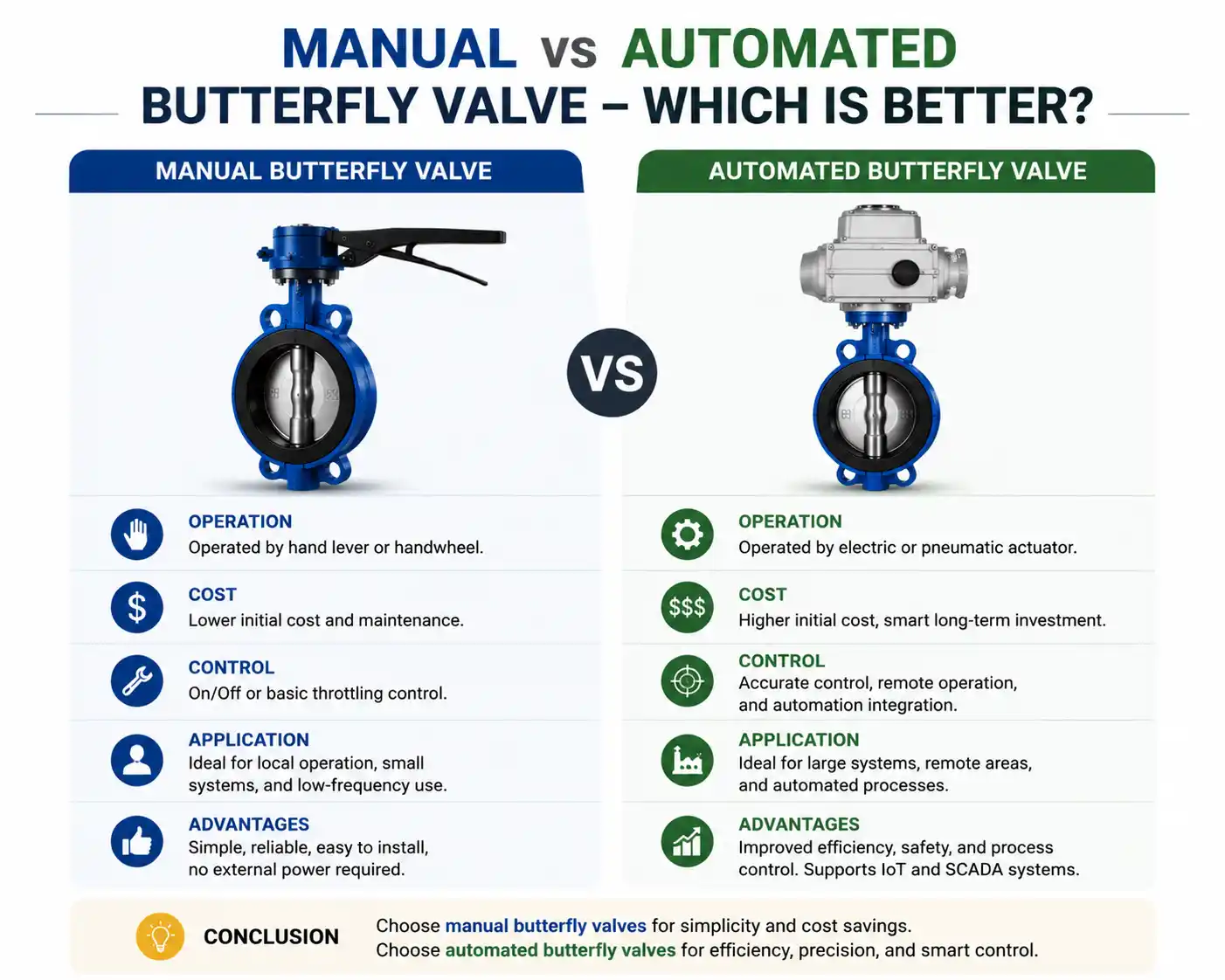
Neither manual nor automated butterfly valves are universally better. Manual butterfly valves are better for low-cost, simple, and infrequent operation, while automated butterfly valves are better for remote control, fast operation, and process automation systems. The best choice depends on control requirements and system complexity.
Operation Method Difference
Manual Butterfly Valve
A manual butterfly valve is operated using:
- Hand lever
- Gear operator (for larger sizes)
The operator physically rotates the disc to open or close the valve.
Key characteristics:
- Simple mechanical operation
- No external power required
- Suitable for local control only
Automated Butterfly Valve
An automated butterfly valve uses an actuator:
- Electric actuator
- Pneumatic actuator
- Hydraulic actuator (less common)
It receives control signals from a system or controller.
Key characteristics:
- Remote operation capability
- Integration with PLC/SCADA systems
- Can support automation and feedback control
Control and Operation Speed
Manual
- Slower operation
- Requires human presence
- Not suitable for frequent switching
Automated
- Fast and consistent operation
- Can respond to control signals instantly
- Ideal for high-cycle systems
Cost Comparison
Manual Butterfly Valve
- Lowest cost option
- No actuator required
- Minimal installation cost
Automated Butterfly Valve
- Higher initial cost
- Requires actuator and control system
- Additional wiring or air supply needed
Maintenance Requirements
Manual
- Very low maintenance
- Simple mechanical parts
- Long service life if properly used
Automated
- Requires actuator maintenance
- Electrical or pneumatic system upkeep
- More complex troubleshooting
Reliability and Safety
Manual
- Highly reliable in simple systems
- No dependency on power supply
- Not suitable for hazardous or remote areas
Automated
- Suitable for dangerous or remote environments
- Can include fail-safe features
- Depends on power or air supply
Applications
Manual Butterfly Valve Applications
- Water distribution systems
- HVAC systems
- Fire protection systems
- Small-scale industrial pipelines
- Low-frequency operation systems
Automated Butterfly Valve Applications
- Oil and gas industry
- Chemical processing plants
- Power plants
- Water treatment automation systems
- Remote pipeline control systems
- High-cycle industrial operations
When to Choose Each Type
Choose Manual Butterfly Valve if you need:
- Low cost solution
- Simple on/off operation
- Occasional use
- No automation requirements
Choose Automated Butterfly Valve if you need:
- Remote control capability
- Process automation
- Fast and frequent operation
- Integration with control systems
- Industrial-scale operations
Conclusion
Manual butterfly valves are best for simple, low-cost, and infrequent operation systems, while automated butterfly valves are better for industrial automation, remote control, and high-efficiency operations. The right choice depends on whether the system prioritizes simplicity or automation.
Frequently Asked Questions
Is an automated butterfly valve better than a manual one?
It depends on the application. Automated valves are better for remote control and industrial automation, while manual valves are better for simple and low-cost systems.
Do automated butterfly valves require electricity?
Electric actuated valves do, but pneumatic automated valves use compressed air instead of electricity.
When should I use a manual butterfly valve?
Manual butterfly valves are suitable when operation is infrequent and no automation or remote control is required.
Related Articles
Technical & Design Insights
- How Does a Butterfly Valve Work
- Working Principle of Butterfly Valve
- Butterfly Valve Components
- Butterfly Valve Materials
- Wafer vs Lug Butterfly Valve
- Wafer vs Lug vs Flanged Butterfly Valve
- High Performance vs Concentric Butterfly Valve
- Double Offset vs Triple Offset Butterfly Valve
- Soft Seat vs Metal Seat Butterfly Valve
- Rubber Lined vs PTFE Butterfly Valve
- Manual vs Automated Butterfly Valve
- Electric vs Pneumatic Butterfly Valve
Commercial & Purchasing Topics
- Wafer Butterfly Valve Wholesale Price
- Stainless Steel Butterfly Valve Factory Direct Supplier
- API 609 Butterfly Valve Manufacturer in China Guide
- Electric Butterfly Valve Price List DN50 DN200
- Pneumatic Butterfly Valve Bulk Order Supplier
- High Performance Butterfly Valve Export Supplier
- Industrial Butterfly Valve Quotation Fast Delivery
- Butterfly Valve OEM Manufacturer Oil & Gas Industry
- Butterfly Valve Supplier Water Treatment Project
- Butterfly Valve Supplier Industrial Applications