
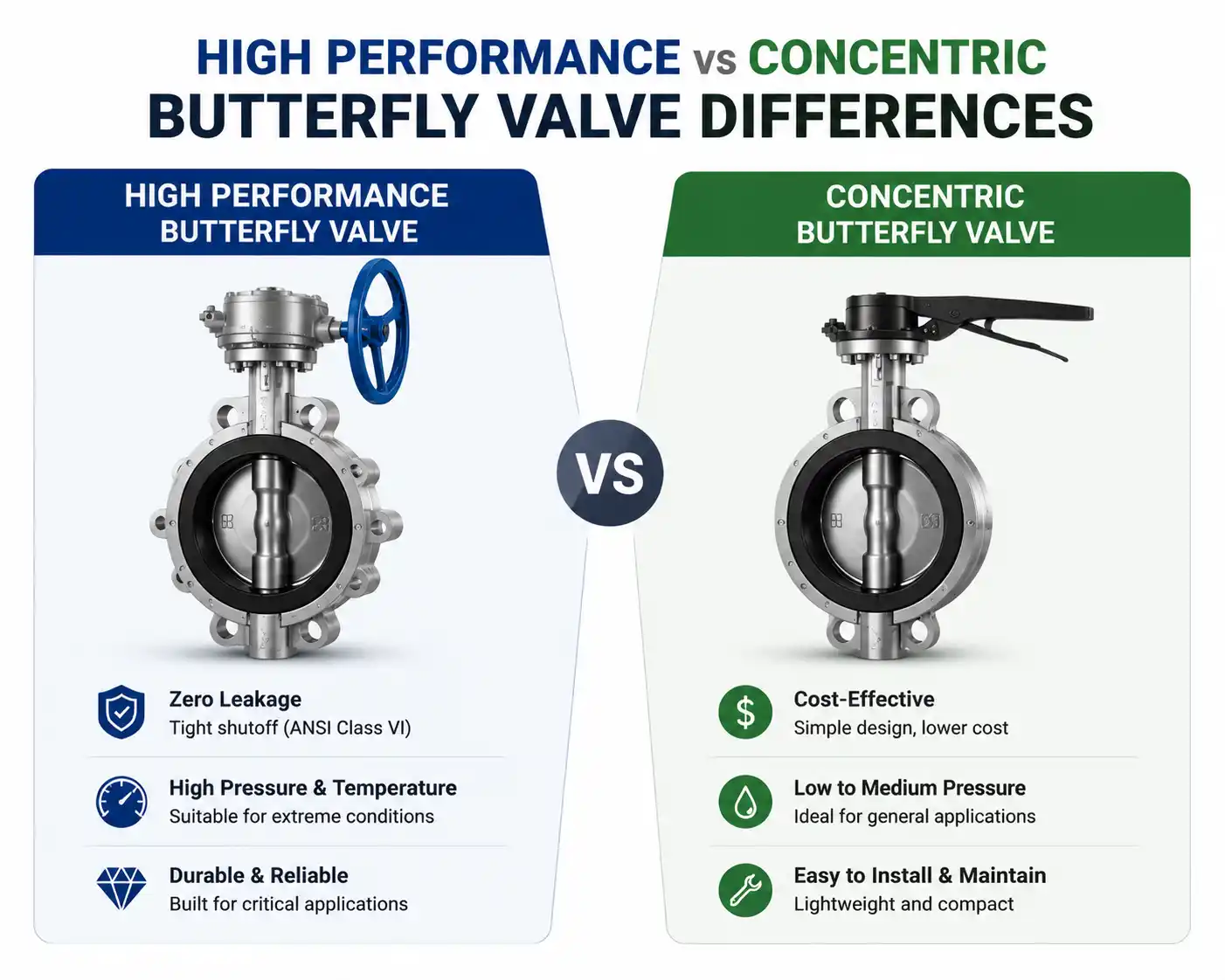
Direct Answer
A concentric butterfly valve uses a centered disc with a rubber seat and is designed for low-pressure, general utility applications, while a high performance butterfly valve uses an offset disc design and is built for higher pressure, higher temperature, and more demanding industrial services. The main difference lies in sealing design, pressure capability, and application range.
Design Structure Difference
Concentric Butterfly Valve
A concentric butterfly valve has a centered disc aligned with the pipe axis.
Key characteristics:
- Disc rotates around the center of the valve body
- Soft rubber seat provides sealing
- Simple and economical structure
- Zero-offset design
High Performance Butterfly Valve
A high performance butterfly valve uses a double-offset or triple-offset design.
Key characteristics:
- Disc is offset from center
- Reduced friction between disc and seat
- More advanced sealing geometry
- Suitable for severe service conditions
Sealing Performance
Concentric Type
- Rubber seat contact sealing
- Suitable for bubble-tight shutoff
- Best for clean fluids (water, HVAC)
- Seat wears faster under pressure/temperature
High Performance Type
- Metal or reinforced seat options
- Better sealing under pressure and temperature
- Lower wear due to offset design
- Suitable for frequent operation
Pressure and Temperature Capability
Concentric Butterfly Valve
- Low to medium pressure
- Typically PN10–PN16 / Class 150
- Limited temperature resistance due to elastomer seat
High Performance Butterfly Valve
- Medium to high pressure
- Can reach Class 300 and above
- Suitable for elevated temperature service
Application Differences
Concentric Butterfly Valve Applications
- Water supply systems
- HVAC systems
- Irrigation
- Fire protection
- Low-pressure industrial utilities
High Performance Butterfly Valve Applications
- Oil and gas systems
- Chemical processing
- Power plants
- Steam service
- Industrial process control
Cost Comparison
Concentric Type
- Lower cost
- Simple manufacturing
- Economical for large-scale water systems
High Performance Type
- Higher cost
- More complex design
- Better lifecycle value in demanding service
Maintenance and Lifespan
Concentric Valve
- Easier maintenance
- Seat replacement more frequent under harsh conditions
- Best for non-critical systems
High Performance Valve
- Longer service life
- Better resistance to wear
- Lower maintenance in high-duty applications
When to Choose Each Type
Choose Concentric Butterfly Valve if you need:
- Low cost solution
- Water or HVAC service
- Low pressure system
- Simple on/off operation
Choose High Performance Butterfly Valve if you need:
- Higher pressure handling
- Better sealing durability
- Industrial or chemical service
- Frequent operation cycles
Conclusion
Concentric butterfly valves are best for low-pressure, cost-sensitive applications, while high performance butterfly valves are designed for higher pressure, temperature, and industrial-grade performance. The choice depends on system demands, not a universal superiority of one design.
Frequently Asked Questions
Is a high performance butterfly valve better than a concentric type?
It depends on the application. High performance valves handle higher pressure and temperature, while concentric valves are more economical for basic water systems.
Can concentric butterfly valves be used in industrial applications?
They can be used in light industrial utility systems, but they are not suitable for high-pressure or high-temperature services.
What is the main design difference between the two valves?
Concentric valves have a centered disc with a rubber seat, while high performance valves use offset disc designs to reduce friction and improve sealing.
Related Articles
Technical & Design Insights
- How Does a Butterfly Valve Work
- Working Principle of Butterfly Valve
- Butterfly Valve Components
- Butterfly Valve Materials
- Wafer vs Lug Butterfly Valve
- Wafer vs Lug vs Flanged Butterfly Valve
- High Performance vs Concentric Butterfly Valve
- Double Offset vs Triple Offset Butterfly Valve
- Soft Seat vs Metal Seat Butterfly Valve
- Rubber Lined vs PTFE Butterfly Valve
- Manual vs Automated Butterfly Valve
- Electric vs Pneumatic Butterfly Valve
Commercial & Purchasing Topics
- Wafer Butterfly Valve Wholesale Price
- Stainless Steel Butterfly Valve Factory Direct Supplier
- API 609 Butterfly Valve Manufacturer in China Guide
- Electric Butterfly Valve Price List DN50 DN200
- Pneumatic Butterfly Valve Bulk Order Supplier
- High Performance Butterfly Valve Export Supplier
- Industrial Butterfly Valve Quotation Fast Delivery
- Butterfly Valve OEM Manufacturer Oil & Gas Industry
- Butterfly Valve Supplier Water Treatment Project
- Butterfly Valve Supplier Industrial Applications