
Direct Answer
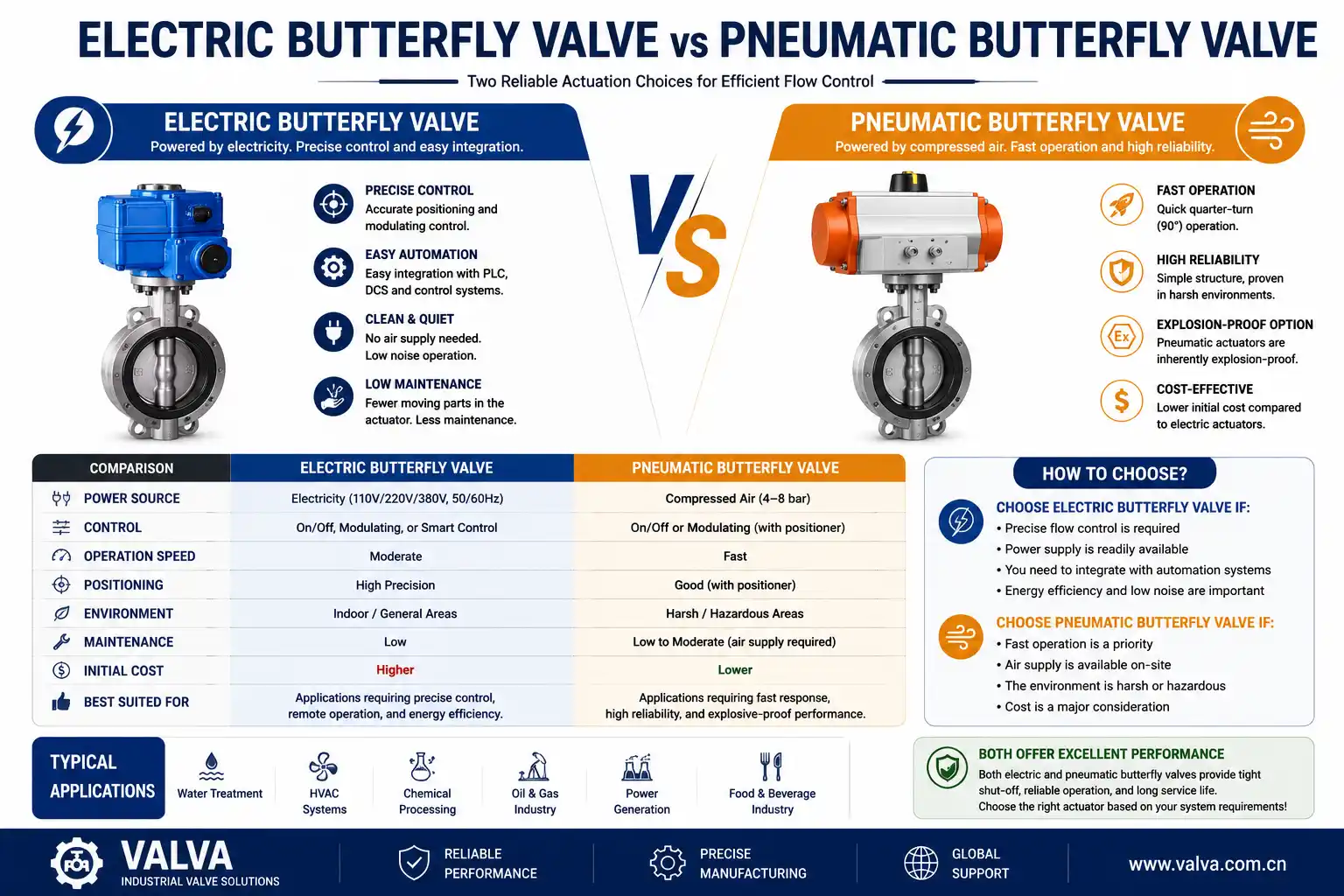
Electric butterfly valves use an electric actuator for precise, automated control, while pneumatic butterfly valves use compressed air for faster, more durable, and safer operation in harsh industrial environments. Electric types are better for accuracy and remote control, whereas pneumatic types are better for speed, reliability, and high-cycle applications.
Power Source Difference
Electric Butterfly Valve
Electric butterfly valves operate using an electric actuator powered by electricity.
They are controlled by:
- On/off switches
- Control systems (PLC/SCADA)
- Remote automation signals
Key advantage: precise positioning and easy integration with digital systems.
Pneumatic Butterfly Valve
Pneumatic butterfly valves use compressed air to drive the actuator.
They require:
- Air compressor system
- Air supply lines
- Control solenoid valves
Key advantage: fast response and high reliability in industrial environments.
Speed and Response Time
Electric
- Moderate opening/closing speed
- Adjustable positioning
- Suitable for controlled flow regulation
Pneumatic
- Very fast actuation
- Ideal for emergency shut-off systems
- Better for high-cycle operations
Accuracy and Control
Electric actuators provide higher precision control, making them suitable for:
- Flow regulation
- Process control systems
- Automated industrial plants
Pneumatic actuators are generally used for simple open/close functions, though positioners can improve control accuracy.
Safety and Operating Environment
Electric Valve
- Sensitive to moisture and explosion risks
- Requires proper insulation and protection
- Not ideal for hazardous environments without special design
Pneumatic Valve
- Safer in explosive or flammable environments
- No electrical sparks
- Common in oil & gas and chemical plants
Cost Comparison
Electric Butterfly Valve
- Higher initial cost
- Lower infrastructure requirement (no air system needed)
- Higher maintenance cost for electronics
Pneumatic Butterfly Valve
- Lower actuator cost
- Requires air supply system (additional infrastructure cost)
- Lower maintenance in harsh environments
Maintenance Requirements
Electric
- Requires motor and control system maintenance
- More sensitive to electrical failure
- Longer repair time in complex systems
Pneumatic
- Simpler mechanical structure
- Easier maintenance
- Fewer electronic components
Industrial Applications
Electric Butterfly Valve Applications
- Water treatment plants
- HVAC systems
- Building automation
- Food and beverage processing
- Remote pipeline control systems
Pneumatic Butterfly Valve Applications
- Oil and gas industry
- Chemical processing
- Power plants
- Mining operations
- High-cycle industrial systems
- Explosion-risk environments
Which One Should You Choose?
Choose Electric Butterfly Valve if you need:
- Precise flow control
- Remote automation
- Integration with PLC/SCADA systems
- Lower infrastructure complexity
Choose Pneumatic Butterfly Valve if you need:
- Fast operation
- High reliability
- Explosion-proof performance
- Heavy-duty industrial use
- High cycle frequency
Conclusion
Electric butterfly valves are best for precision control and automation systems, while pneumatic butterfly valves are better for speed, durability, and safety in harsh industrial environments. The best choice depends on whether your priority is control accuracy or operational reliability.
Frequently Asked Questions
Which is faster: electric or pneumatic butterfly valve?
Pneumatic butterfly valves are generally faster because compressed air provides rapid actuation.
Which valve is better for automation systems?
Electric butterfly valves are better for precise automation and integration with PLC or SCADA control systems.
Are pneumatic butterfly valves safer?
Yes. Pneumatic valves are safer in explosive or hazardous environments because they do not rely on electricity.
Related Articles
Technical & Design Insights
- How Does a Butterfly Valve Work
- Working Principle of Butterfly Valve
- Butterfly Valve Components
- Butterfly Valve Materials
- Wafer vs Lug Butterfly Valve
- Wafer vs Lug vs Flanged Butterfly Valve
- High Performance vs Concentric Butterfly Valve
- Double Offset vs Triple Offset Butterfly Valve
- Soft Seat vs Metal Seat Butterfly Valve
- Rubber Lined vs PTFE Butterfly Valve
- Manual vs Automated Butterfly Valve
- Electric vs Pneumatic Butterfly Valve
Commercial & Purchasing Topics
- Wafer Butterfly Valve Wholesale Price
- Stainless Steel Butterfly Valve Factory Direct Supplier
- API 609 Butterfly Valve Manufacturer in China Guide
- Electric Butterfly Valve Price List DN50 DN200
- Pneumatic Butterfly Valve Bulk Order Supplier
- High Performance Butterfly Valve Export Supplier
- Industrial Butterfly Valve Quotation Fast Delivery
- Butterfly Valve OEM Manufacturer Oil & Gas Industry
- Butterfly Valve Supplier Water Treatment Project
- Butterfly Valve Supplier Industrial Applications