Direct Answer
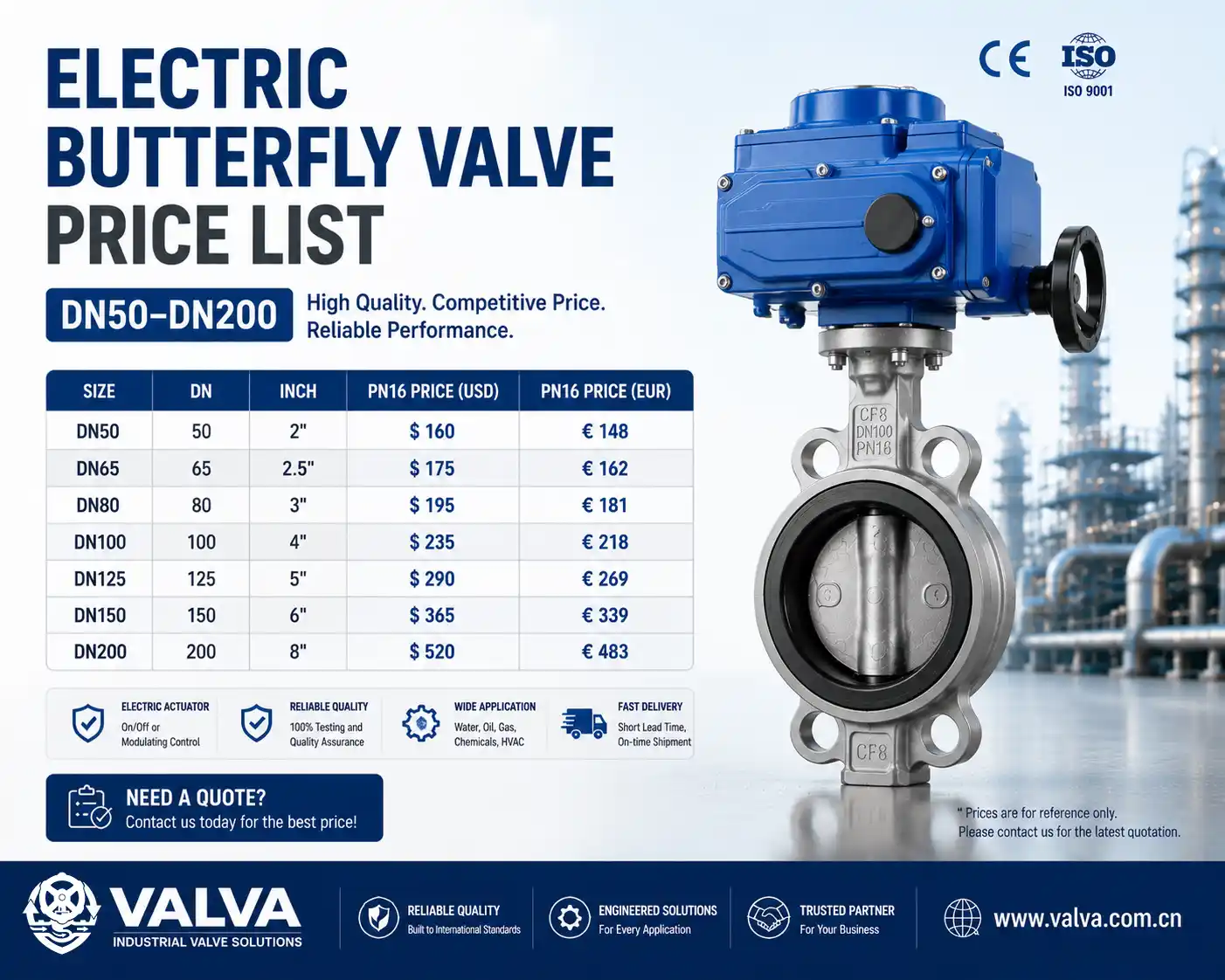
Electric butterfly valve prices for DN50 to DN200 vary mainly based on valve material, pressure rating, actuator type, and seat design. DN50 is typically the lowest cost range, while DN200 prices increase significantly due to larger body size, higher torque actuator requirements, and heavier materials.
Price Overview (General Industrial Range)
Note: Prices vary by supplier, configuration, and region.
DN50 Electric Butterfly Valve
- Lower torque requirement
- Smaller actuator size
- Common materials: cast iron / stainless steel
- Typical applications: HVAC, water systems
Price trend: Low cost range (entry industrial level)
DN65–DN100 Electric Butterfly Valve
- Medium torque actuator
- Higher flow capacity
- More material usage
- Used in industrial water and process systems
Price trend: Medium cost range
DN125–DN200 Electric Butterfly Valve
- Higher torque electric actuator required
- Stronger valve body construction
- Often used in industrial pipelines
- More customization options
Price trend: Higher cost range
Key Factors Affecting Price
1. Valve Material
- Cast iron → lowest cost
- Ductile iron → balanced
- Stainless steel (304/316) → higher cost
- Special alloys → premium pricing
2. Electric Actuator Type
- On/off actuator → lower cost
- Modulating actuator → higher cost
- Explosion-proof actuator → highest cost
3. Pressure Rating
- PN10 / PN16 → standard pricing
- Class 150 → industrial standard
- Class 300+ → significantly higher cost
4. Seat Material
- EPDM / NBR → economical
- PTFE → chemical resistant, higher cost
- Metal seat → highest durability and price
5. Control Function
- Basic open/close
- Position feedback
- Smart control integration (4–20mA, PLC/SCADA)
More control features = higher price.
Industrial Application Differences
DN50–DN100 Applications
- HVAC systems
- Water distribution
- Light industrial pipelines
DN125–DN200 Applications
- Chemical processing
- Cooling water systems
- Industrial automation lines
- Medium-scale process plants
How to Get Best Price
To reduce cost effectively:
- Standardize valve size and material
- Choose wafer type when possible
- Avoid unnecessary high-pressure upgrades
- Order in bulk from factory suppliers
- Match actuator only to real torque requirements
Conclusion
Electric butterfly valve prices from DN50 to DN200 increase mainly due to size, actuator torque requirements, material selection, and control complexity. DN50 is cost-efficient for small systems, while DN200 is designed for heavier industrial applications with higher performance demands.
Frequently Asked Questions
Why is DN200 electric butterfly valve more expensive?
Because it requires more material, higher torque actuator, and stronger structural design compared to smaller sizes.
What is the cheapest electric butterfly valve size?
DN50 is typically the lowest cost due to smaller size and lower actuator torque requirements.
Does actuator type affect butterfly valve price?
Yes, modulating and explosion-proof electric actuators significantly increase the total valve cost.
Related Articles
Technical & Design Insights
- How Does a Butterfly Valve Work
- Working Principle of Butterfly Valve
- Butterfly Valve Components
- Butterfly Valve Materials
- Wafer vs Lug Butterfly Valve
- Wafer vs Lug vs Flanged Butterfly Valve
- High Performance vs Concentric Butterfly Valve
- Double Offset vs Triple Offset Butterfly Valve
- Soft Seat vs Metal Seat Butterfly Valve
- Rubber Lined vs PTFE Butterfly Valve
- Manual vs Automated Butterfly Valve
- Electric vs Pneumatic Butterfly Valve
Commercial & Purchasing Topics
- Wafer Butterfly Valve Wholesale Price
- Stainless Steel Butterfly Valve Factory Direct Supplier
- API 609 Butterfly Valve Manufacturer in China Guide
- Electric Butterfly Valve Price List DN50 DN200
- Pneumatic Butterfly Valve Bulk Order Supplier
- High Performance Butterfly Valve Export Supplier
- Industrial Butterfly Valve Quotation Fast Delivery
- Butterfly Valve OEM Manufacturer Oil & Gas Industry
- Butterfly Valve Supplier Water Treatment Project
- Butterfly Valve Supplier Industrial Applications