Direct Answer
A reliable butterfly valve supplier for industrial applications is one that provides certified products (such as API/ISO standards), consistent quality control, material traceability, competitive pricing, and strong technical support. The best supplier depends on your industry requirements, pressure class, and delivery expectations.
Product Quality and Manufacturing Standards
A professional butterfly valve supplier should follow strict manufacturing standards.
Key certifications include:
- ISO 9001 quality management system
- API 609 / API 6D (for high-performance valves)
- CE / PED compliance (for European markets)
- Fire-safe testing (for oil and gas applications)
High-quality suppliers ensure:
- Dimensional accuracy
- Pressure testing compliance
- Material traceability
- Long service life performance
Material Options and Customization Capability
Industrial applications require different materials depending on service conditions.
A good supplier should offer:
- Cast iron and ductile iron for water systems
- Carbon steel for industrial pipelines
- Stainless steel (304/316) for corrosion resistance
- Duplex stainless steel for offshore use
- Special linings (PTFE, rubber, epoxy coatings)
Customization options may include:
- Seat material selection
- Disc coating options
- End connection types (wafer, lug, flanged)
- Actuator integration
Pressure Rating and Industrial Suitability
A qualified butterfly valve supplier should provide valves for different pressure classes:
- PN10–PN16 (water systems)
- Class 150 (general industry)
- Class 300+ (high-performance applications)
They should also clearly define:
- Temperature limits
- Media compatibility
- Application boundaries
Pricing and Cost Transparency
Industrial buyers should evaluate:
- Unit price vs performance
- Bulk order discounts
- Total cost of ownership (TCO)
- Spare parts availability
Low price alone should not be the main factor. Reliable suppliers balance cost with durability and compliance.
Delivery Time and Supply Chain Capability
A strong butterfly valve supplier should provide:
- Stable production capacity
- Predictable lead times
- Export packaging standards
- Logistics support for global shipping
For industrial projects, delays can significantly increase project costs.
Technical Support and After-Sales Service
Good suppliers provide more than just products.
They also offer:
- Installation guidance
- Selection support
- Maintenance recommendations
- Replacement parts supply
- Technical documentation (datasheets, drawings)
This is especially important for complex industrial systems.
Industrial Applications Covered
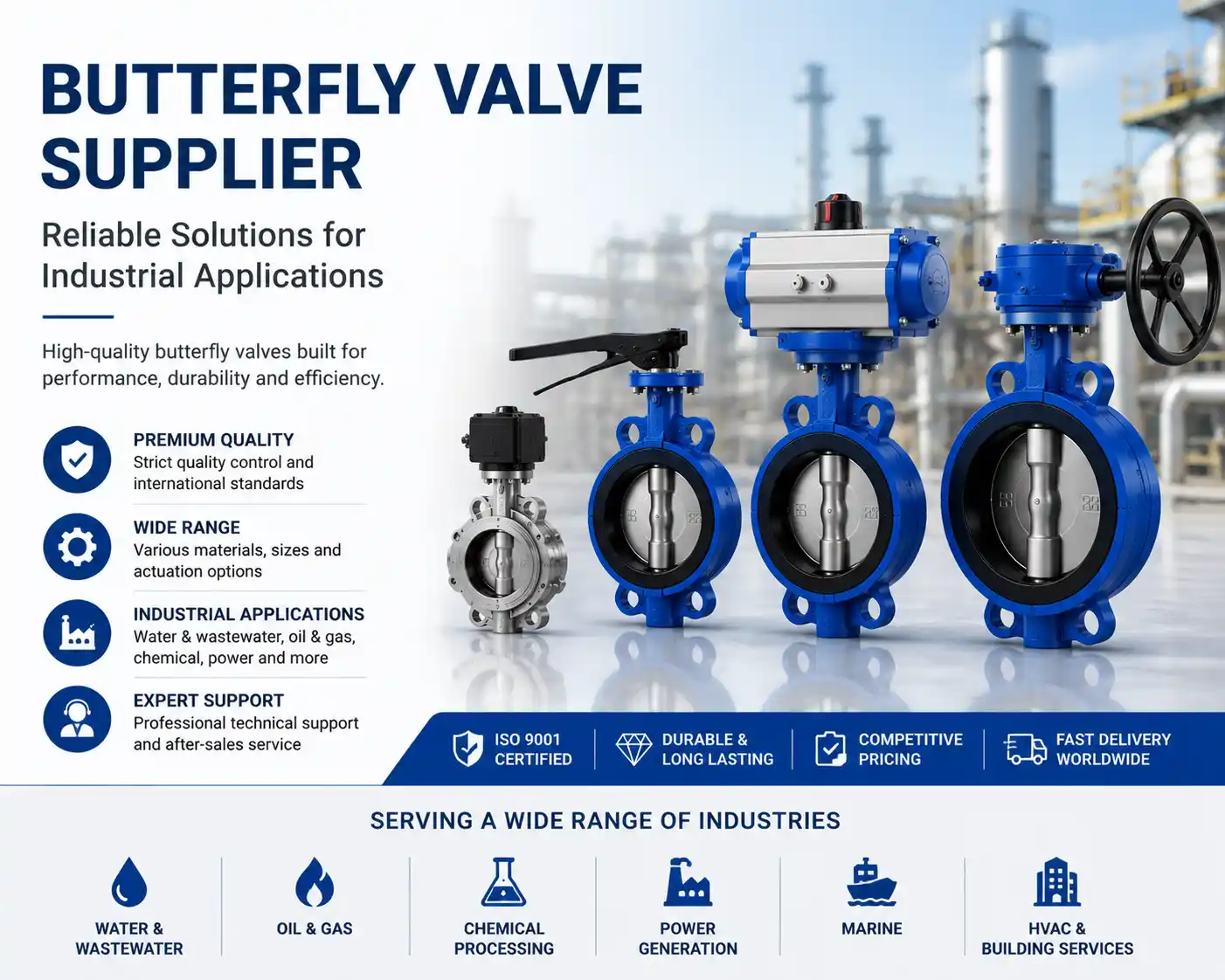
A capable butterfly valve supplier should serve multiple industries, such as:
- Water treatment plants
- Oil and gas pipelines
- Power generation systems
- Chemical processing plants
- HVAC and building systems
- Marine and offshore engineering
How to Evaluate a Reliable Supplier
Before choosing a supplier, check:
Manufacturing Capability
- In-house production or trading company
- Factory inspection availability
- Production scale
Quality Control
- Pressure testing reports
- Material certificates (MTC)
- Third-party inspection options
Market Experience
- Export history
- Industry references
- Project case studies
Conclusion
A reliable butterfly valve supplier for industrial applications should combine certified quality, suitable material options, stable production capacity, and strong technical support. The best choice is not only based on price, but also on compliance, performance, and long-term reliability.
Frequently Asked Questions
How do I choose a butterfly valve supplier?
Choose a supplier based on certifications, material options, production capacity, quality control, and after-sales support rather than price alone.
What certifications should a butterfly valve supplier have?
Common certifications include ISO 9001, API 609, API 6D, CE, and fire-safe testing approvals depending on the application.
Why is supplier selection important for butterfly valves?
Because valve performance directly affects system safety, efficiency, and maintenance cost in industrial applications.
Related Articles
Technical & Design Insights
- How Does a Butterfly Valve Work
- Working Principle of Butterfly Valve
- Butterfly Valve Components
- Butterfly Valve Materials
- Wafer vs Lug Butterfly Valve
- Wafer vs Lug vs Flanged Butterfly Valve
- High Performance vs Concentric Butterfly Valve
- Double Offset vs Triple Offset Butterfly Valve
- Soft Seat vs Metal Seat Butterfly Valve
- Rubber Lined vs PTFE Butterfly Valve
- Manual vs Automated Butterfly Valve
- Electric vs Pneumatic Butterfly Valve
Commercial & Purchasing Topics
- Wafer Butterfly Valve Wholesale Price
- Stainless Steel Butterfly Valve Factory Direct Supplier
- API 609 Butterfly Valve Manufacturer in China Guide
- Electric Butterfly Valve Price List DN50 DN200
- Pneumatic Butterfly Valve Bulk Order Supplier
- High Performance Butterfly Valve Export Supplier
- Industrial Butterfly Valve Quotation Fast Delivery
- Butterfly Valve OEM Manufacturer Oil & Gas Industry
- Butterfly Valve Supplier Water Treatment Project
- Butterfly Valve Supplier Industrial Applications