
Direct Answer
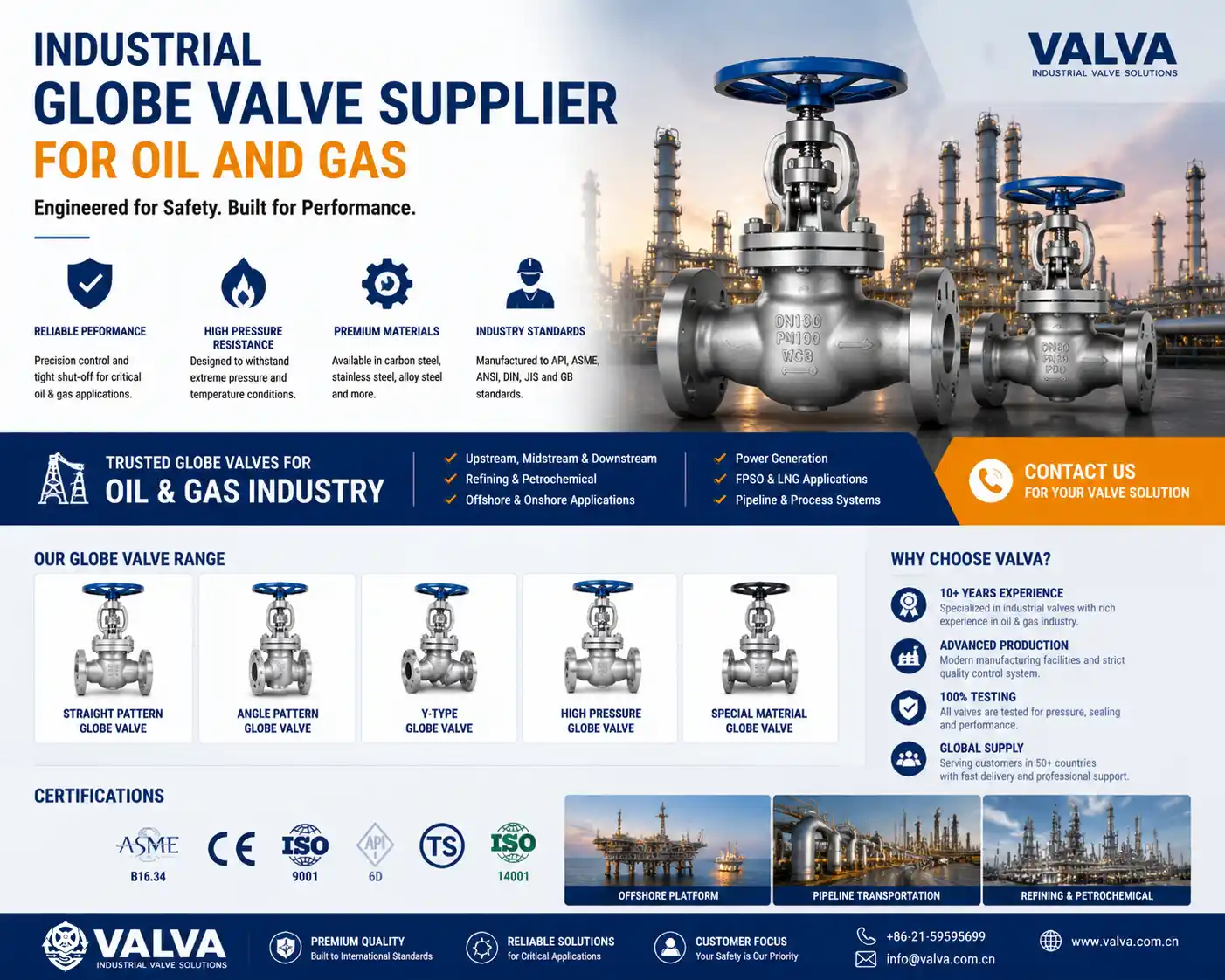
An industrial globe valve supplier for oil and gas provides high-pressure, high-temperature valves designed for flow regulation in upstream, midstream, and downstream applications, typically manufactured in carbon steel, stainless steel, or forged steel and compliant with API standards.
Why Globe Valves Are Used in Oil and Gas Industry
Globe valves are widely used in oil and gas because they offer:
- Precise flow regulation
- Reliable shut-off performance
- Strong resistance to pressure and temperature
- Suitable throttling capability for process control
Unlike isolation valves, globe valves are specifically designed for continuous flow adjustment, which is critical in process pipelines.
Common Oil and Gas Applications
Industrial globe valves are used across multiple stages of oil and gas operations:
Upstream (Production)
- Wellhead control systems
- Choke and flow regulation lines
- Injection systems
Midstream (Transportation)
- Pipeline pressure control
- Compressor station systems
- Metering skids
Downstream (Refining)
- Refinery process units
- Steam and heating systems
- Chemical injection lines
- Utility pipelines
Materials Used in Oil and Gas Globe Valves
Suppliers typically offer several material options depending on service conditions:
Carbon Steel (WCB, WCC)
- General oil and gas service
- Cost-effective
- Suitable for moderate corrosion environments
Stainless Steel (304, 316)
- Corrosive fluids
- Offshore and marine environments
- Chemical-rich process systems
Forged Steel (A105, F304, F316)
- High-pressure applications
- Instrumentation lines
- Critical safety systems
API Standards for Oil and Gas Globe Valves
Reliable suppliers comply with strict industry standards:
- API 600 – Steel gate and globe valves
- API 602 – Forged steel valves
- API 6D – Pipeline valves
- ASME B16.34 – Valve design and pressure rating
- NACE MR0175 – Sour service (H₂S environments)
These standards ensure safety and performance in demanding conditions.
Key Features of Industrial Globe Valves
Oil and gas globe valves are designed with:
- High-pressure body construction
- Fire-safe design options
- Anti-corrosion coatings
- Metal or soft seating
- Extended bonnet for temperature protection
- Actuator compatibility (pneumatic/electric)
How to Choose a Globe Valve Supplier for Oil and Gas
When selecting a supplier, consider:
1. Certifications
- API, ISO, CE compliance
- Third-party inspection capability
2. Manufacturing Capability
- Forging and casting facilities
- CNC machining precision
- Pressure testing equipment
3. Quality Control
- Material traceability (MTC)
- NDT testing (RT, UT, PT)
- Hydrostatic testing
4. Export Experience
- Oil and gas project references
- Compliance with international documentation standards
- Reliable delivery schedules
Advantages of Working with Professional Suppliers
- Stable product quality
- Compliance with global oil & gas standards
- Custom OEM engineering support
- Bulk order capability
- Faster project procurement cycles
Conclusion
An industrial globe valve supplier for oil and gas provides high-performance flow control solutions designed for extreme pressure, temperature, and safety requirements. Choosing a qualified supplier ensures reliability, compliance with API standards, and long-term operational safety in critical energy infrastructure.
Frequently Asked Questions
Why are globe valves used in oil and gas pipelines?
Because they provide precise flow control and stable throttling performance under high pressure and temperature conditions.
What material is best for oil and gas globe valves?
Forged steel and stainless steel are most commonly used due to their strength and corrosion resistance.
Are API-certified globe valves required in oil and gas projects?
Yes. API certification ensures safety, reliability, and compliance with international oil and gas engineering standards.
Related Articles
Technical & Design Insights
Materials & Standards
Maintenance & Operation
Commercial & Purchasing Topics
- Globe Valve Manufacturer China
- Industrial Globe Valve Supplier Oil & Gas
- Stainless Steel Globe Valve Factory Direct Supplier
- Globe Valve Price List DN15 to DN200
- High Pressure Globe Valve Supplier
- Globe Valve Quotation Request Fast Delivery
- Cast Steel Globe Valve Supplier Power Plant
- Globe Valve Bulk Order OEM Manufacturer
- Globe Valve Wholesale Price Industrial Use