
Direct Answer
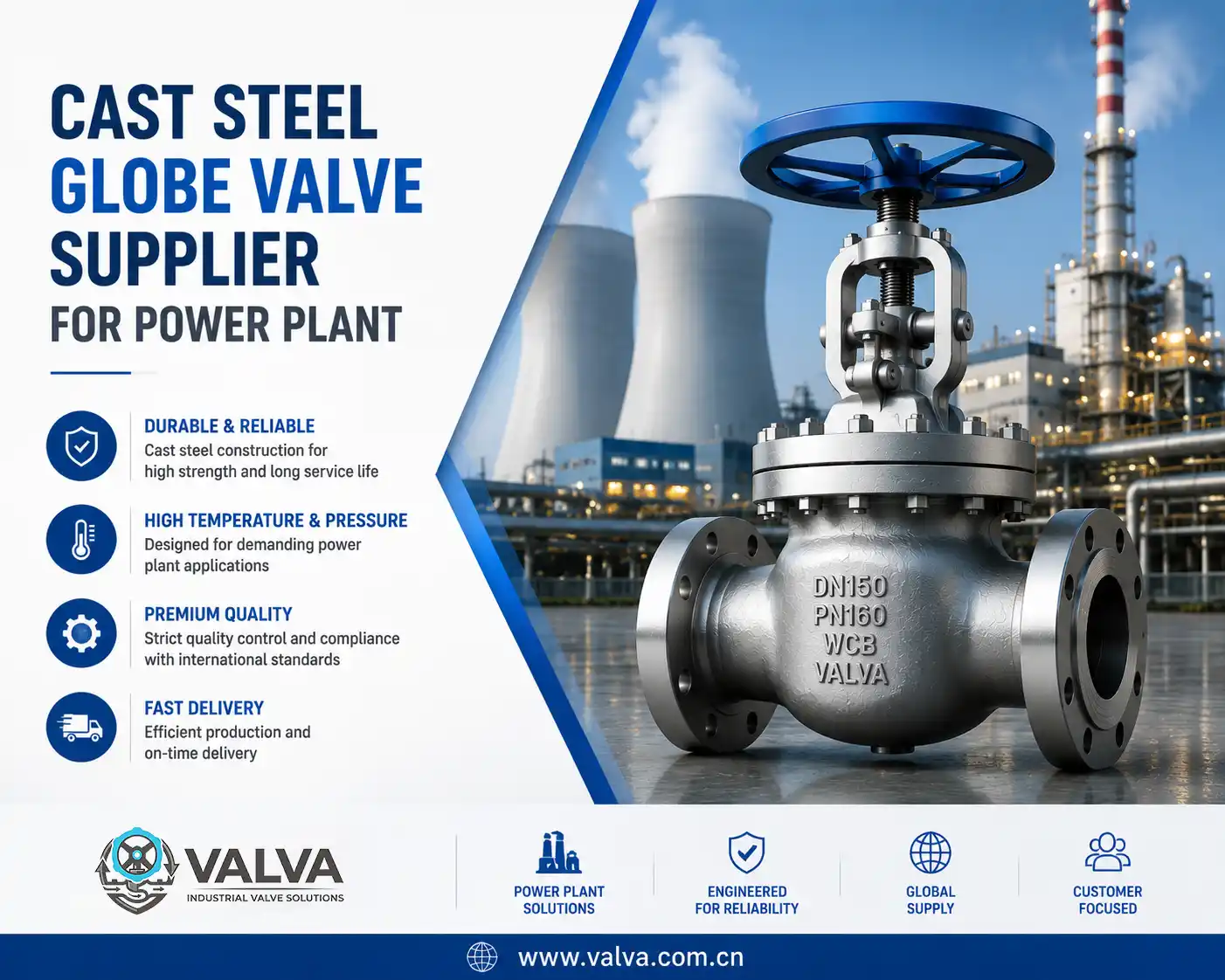
A cast steel globe valve supplier for power plant applications provides heavy-duty flow control valves designed for steam, water, and high-temperature systems, typically compliant with ASME and API standards to ensure safe and reliable operation in power generation environments.
Why Cast Steel Globe Valves Are Used in Power Plants
Cast steel globe valves are widely used in power plants because they offer:
- High strength for medium to high pressure systems
- Good resistance to thermal stress
- Reliable throttling performance
- Suitable for large pipeline systems
- Cost-effective compared to forged steel in large sizes
Key Applications in Power Plants
Cast steel globe valves are commonly installed in:
- Boiler feedwater systems
- Steam distribution lines
- Condensate return systems
- Cooling water circuits
- Turbine auxiliary systems
- Power plant shutdown and isolation lines
Materials Used in Power Plant Globe Valves
WCB / WCC (Carbon Cast Steel)
- Standard power plant applications
- Good mechanical strength
- Suitable for steam and water systems
Stainless Steel (CF8 / CF8M)
- Corrosion resistance
- Used in chemical dosing and treated water systems
Alloy Steel (WC6 / WC9)
- High temperature steam service
- Superheated steam pipelines
- Advanced thermal resistance
Key Standards for Power Plant Globe Valves
Reliable suppliers follow strict standards such as:
- ASME B16.34 – valve design and pressure rating
- API 600 – steel valve construction
- API 602 – forged valve standards (small sizes)
- ISO 9001 – quality management
- NACE MR0175 – sour service resistance
Features Required in Power Plant Globe Valves
High-quality cast steel globe valves include:
- Pressure-retaining body design
- Extended bonnet for high temperature protection
- Precision-machined disc and seat
- Low leakage sealing system
- Actuator compatibility (electric/pneumatic)
- Fire-safe design (optional)
Why Cast Steel Is Preferred in Power Plants
Compared to forged steel, cast steel is preferred for:
- Larger valve sizes (DN50–DN600+)
- Lower manufacturing cost
- Complex valve body shapes
- Balanced performance for utility systems
How to Choose a Reliable Supplier
1. Manufacturing Capability
- Casting foundry quality
- CNC machining precision
- Heat treatment facilities
2. Quality Assurance
- Hydrostatic testing
- Non-destructive testing (RT, UT, PT)
- Material certification (MTC)
3. Certifications
- API / ASME compliance
- ISO 9001 certification
- CE / PED for export markets
4. Power Plant Experience
- Utility project references
- Steam system application history
- Engineering documentation support
Advantages of Working with Professional Suppliers
- Stable long-term performance
- Compliance with strict power industry standards
- Reduced maintenance downtime
- OEM customization options
- Reliable delivery for large-scale projects
Conclusion
A cast steel globe valve supplier for power plant applications provides essential flow control solutions for steam, water, and thermal systems, ensuring safe and efficient operation in power generation facilities. Choosing a qualified supplier ensures compliance with ASME/API standards and long-term system reliability.
Frequently Asked Questions
Why are cast steel globe valves used in power plants?
Because they provide a strong, cost-effective solution for handling steam and water in large-scale systems.
What material is best for high-temperature steam systems?
Alloy steel such as WC6 or WC9 is commonly used for high-temperature applications.
Are cast steel globe valves suitable for boiler systems?
Yes, they are widely used in boiler feedwater and steam control systems.
Related Articles
Technical & Design Insights
Materials & Standards
Maintenance & Operation
Commercial & Purchasing Topics
- Globe Valve Manufacturer China
- Industrial Globe Valve Supplier Oil & Gas
- Stainless Steel Globe Valve Factory Direct Supplier
- Globe Valve Price List DN15 to DN200
- High Pressure Globe Valve Supplier
- Globe Valve Quotation Request Fast Delivery
- Cast Steel Globe Valve Supplier Power Plant
- Globe Valve Bulk Order OEM Manufacturer
- Globe Valve Wholesale Price Industrial Use